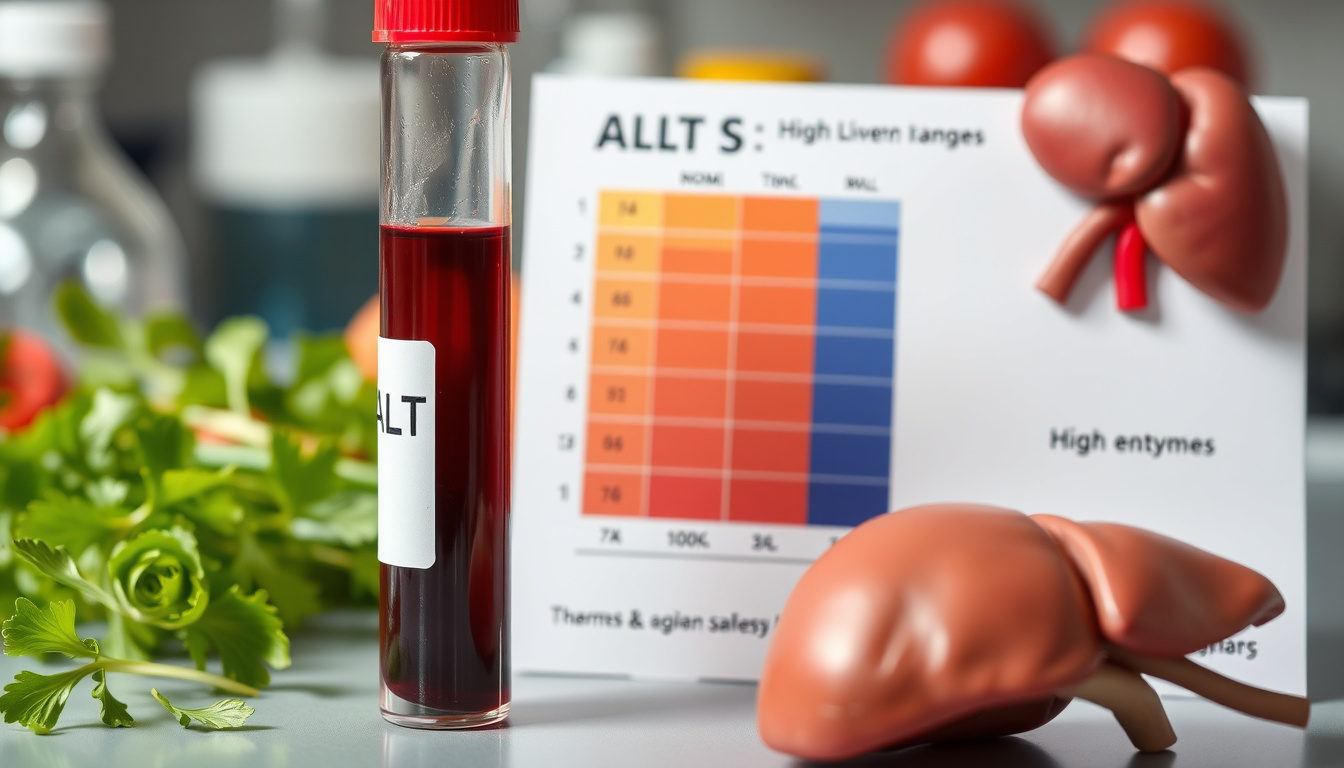
If you’ve ever glanced at a blood test report and noticed “ALT” with a flag next to it, you’re not alone — that little marker is one of the most common signals your liver sends when something’s off. This guide walks you through what high ALT really indicates, how to interpret your levels by age, and evidence-based ways to bring them down.
Normal ALT range (adults): 10–40 U/L ·
Mild elevation: 40–100 U/L ·
Severe elevation: >100 U/L ·
Common cause of high ALT: Fatty liver disease ·
ALT reduction from weight loss: Up to 30% decrease
Quick snapshot
- ALT stands for alanine aminotransferase (MedlinePlus, U.S. National Library of Medicine)
- An enzyme mostly found in the liver (MedlinePlus, U.S. National Library of Medicine)
- Released into blood when liver cells are damaged (Cleveland Clinic, medical center)
- Routine check of liver health (Mayo Clinic, academic medical center)
- Monitor liver disease treatment (MedlinePlus, U.S. National Library of Medicine)
- Detect liver injury from drugs or alcohol (UCSF Health, academic medical center)
- Lose weight if overweight (Mayo Clinic, academic medical center)
- Exercise regularly (WebMD, health publisher)
- Avoid or limit alcohol (UCSF Health, academic medical center)
- Follow a balanced diet (WebMD, health publisher)
- ALT persistently above normal (Ubie Health, clinical guidance)
- Accompanied by jaundice or abdominal pain (UCSF Health, academic medical center)
- History of liver disease risk factors (MedlinePlus, U.S. National Library of Medicine)
Four key facts about the ALT blood test, one pattern: it’s a straightforward marker that can reveal a lot about liver health.
| Attribute | Details |
|---|---|
| Full name | Alanine aminotransferase |
| Normal range (adults) | 10–40 U/L |
| Test type | Blood test (liver panel) |
| Time to results | Usually 24–48 hours |
What does it mean if ALT is high?
An elevated ALT level means liver cells have released more of the enzyme into your bloodstream, indicating inflammation or injury. MedlinePlus, the U.S. National Library of Medicine, confirms that high ALT is often a sign of liver disease. But not every elevation spells trouble – transient rises from fatty meals or temporary inflammation can push ALT up without lasting damage.
Should I worry if my ALT is high?
- Mild elevations (40–100 U/L) are often linked to fatty liver or short-term triggers like a heavy meal or certain supplements (Mayo Clinic, academic medical center).
- Persistently high ALT – especially 2–3 times the upper limit – warrants a workup (Ubie Health, clinical guidance).
- If other liver enzymes (AST, GGT) are also elevated, the likelihood of significant disease increases (UCSF Health, academic medical center).
What causes high ALT levels besides liver disease?
- Alcohol consumption (UCSF Health, academic medical center)
- Certain medications – statins, acetaminophen, some antibiotics (MedlinePlus, U.S. National Library of Medicine)
- Pancreatitis, mononucleosis, and muscle injury can also raise ALT (UCSF Health, academic medical center)
Mild ALT elevations often cause unnecessary worry, but the real risk lies in ignoring persistent levels above 40 U/L – that’s when a deeper investigation can catch early disease.
What is a normal ALT level by age?
Normal ranges differ by laboratory, age, and gender. Mayo Clinic, academic medical center reports a healthy ALT range of 7–55 U/L for males and 7–45 U/L for females age 1 and older. Cleveland Clinic, academic medical center gives a common reference of 7–56 U/L, while UCSF Health, academic medical center uses 4–36 U/L. Quest Diagnostics, a major lab, lists 6–29 U/L for adults. Always check your own lab’s reference range.
How much is too much ALT?
Most experts consider ALT above 40–50 U/L as elevated, though the exact threshold varies. Ubie Health, clinical guidance notes that values in the 60–80 U/L range are often linked to fatty liver or temporary inflammation. A level 2–3 times the upper limit generally triggers further testing.
Normal ALT levels by age and gender
The variations between these ranges illustrate why relying on your own lab’s reference interval is critical for accurate interpretation.
| Group | Typical normal range (U/L) |
|---|---|
| Adult males (Mayo Clinic) | 7–55 |
| Adult females (Mayo Clinic) | 7–45 |
| Adults (Quest Diagnostics) | 6–29 |
| Adults (UCSF Health) | 4–36 |
The pattern: women tend to have lower normal ALT, and some researchers advocate for a lower upper limit to catch early disease earlier.
How do I get my ALT levels down?
Lowering ALT depends entirely on what’s causing it to rise. Mayo Clinic, academic medical center stresses that treating the underlying condition is the only reliable strategy. Here’s a step-by-step approach based on the most common cause – fatty liver.
How do you fix high ALT in the liver?
- Step 1: Confirm the cause – repeat the test and discuss with your clinician (Ubie Health, clinical guidance).
- Step 2: Lose 5–10% of body weight – this can lower ALT by up to 30% in fatty liver disease (Mayo Clinic, academic medical center).
- Step 3: Exercise at least 150 minutes per week – improves liver enzyme levels (WebMD, health publisher).
- Step 4: Avoid alcohol and review medications with a doctor (UCSF Health, academic medical center).
Lifestyle changes to reduce ALT
- Cut back on sugary beverages and fatty meals (Mayo Clinic, academic medical center)
- Eat a balanced diet rich in vegetables, lean protein, and whole grains (WebMD, health publisher)
- Keep blood sugar under control if prediabetic (WebMD, health publisher)
Does high ALT mean fatty liver?
It’s a common link, but not a certainty. MedlinePlus, U.S. National Library of Medicine lists non-alcoholic fatty liver disease (NAFLD) as a frequent cause of elevated ALT, but many people with NAFLD have normal ALT levels. Diagnosis typically requires imaging or biopsy.
Other causes of high ALT
- Viral hepatitis (A, B, C, E) (MedlinePlus, U.S. National Library of Medicine)
- Alcohol-related liver injury (UCSF Health, academic medical center)
- Autoimmune hepatitis (Mayo Clinic, academic medical center)
- Hemochromatosis (iron overload) (UCSF Health, academic medical center)
- Liver ischemia or tumors (UCSF Health, academic medical center)
How fatty liver is diagnosed
A high ALT alone is not diagnostic. UCSF Health, academic medical center explains that doctors look at a full liver panel, imaging (ultrasound, CT, MRI), and sometimes a biopsy to confirm fatty liver. Many people with fatty liver have normal ALT – so a normal test doesn’t rule it out.
Relying only on ALT to rule out fatty liver is risky – about 25% of NAFLD cases show normal ALT. Always ask for a full liver panel and an ultrasound if you have risk factors like obesity or diabetes.
What are the first signs of a bad liver?
Early liver damage is often silent, which is why blood tests are crucial. UCSF Health, academic medical center notes that liver disease is more likely when other liver enzymes are also elevated. But once symptoms appear, the damage may already be advanced.
What are the four warning signs of a damaged liver?
- Jaundice – yellowing of the skin or eyes (MedlinePlus, U.S. National Library of Medicine)
- Dark urine and pale stool (UCSF Health, academic medical center)
- Swelling in the abdomen or legs (Mayo Clinic, academic medical center)
- Confusion or cognitive changes (hepatic encephalopathy) (UCSF Health, academic medical center)
When to see a doctor
If your ALT is persistently high – even mildly – or you notice any of the above symptoms, schedule an appointment. MedlinePlus, U.S. National Library of Medicine advises that early detection of liver issues often prevents progression to cirrhosis. Your primary care provider may refer you to a local medical clinic for follow-up testing.
Liver damage can progress stealthily for years. A simple ALT test, combined with a doctor’s evaluation, is your best early warning system – ignoring it means giving the disease a head start.
What drink repairs the liver?
No single beverage can undo liver damage, but some drinks are clearly linked to better health. Mayo Clinic, academic medical center notes that coffee consumption is associated with lower ALT levels and reduced risk of chronic liver disease. Water is essential for metabolic processes, while alcohol should be minimized or avoided.
Coffee and liver health
- Studies show that drinking 2–3 cups of coffee daily is linked to lower ALT and reduced risk of cirrhosis (Mayo Clinic, academic medical center).
- Coffee contains antioxidants that may reduce liver inflammation (WebMD, health publisher).
Hydration and avoiding alcohol
- Water supports every liver function – dehydration can temporarily raise enzyme levels (UCSF Health, academic medical center).
- Avoiding alcohol is the single most effective dietary change for lowering ALT if alcohol is a contributor (MedlinePlus, U.S. National Library of Medicine).
The implication: no single drink is a cure, but choosing coffee and water over alcohol is one of the simplest evidence-backed steps you can take for your liver.
Step-by-Step Guide to Lowering ALT Levels
If your ALT is elevated, follow these steps in order, consulting your doctor at each stage. Many medications – including some antidepressants like Zoloft – can affect liver enzymes, so a medication review is essential.
- Confirm your lab’s reference range. Because normal ranges vary, use the range on your specific report (Cleveland Clinic, academic medical center).
- Repeat the test after 1–2 weeks. A single high reading may be temporary (Ubie Health, clinical guidance).
- Review all medications and supplements with a clinician (Mayo Clinic, academic medical center).
- Get screened for hepatitis B and C (MedlinePlus, U.S. National Library of Medicine).
- Schedule a liver ultrasound to check for fatty liver (UCSF Health, academic medical center).
- Implement lifestyle changes: target 5–10% weight loss, 150 minutes of exercise weekly, eliminate alcohol, and cut sugary drinks (WebMD, health publisher).
- Recheck ALT after 3 months to gauge progress (Mayo Clinic, academic medical center).
What We Know and What’s Unclear
Confirmed facts
- High ALT indicates liver cell injury (MedlinePlus, U.S. National Library of Medicine)
- Weight loss of 5–10% reduces ALT in fatty liver disease (Mayo Clinic, academic medical center)
- Alcohol abstinence improves ALT (UCSF Health, academic medical center)
What’s unclear
- Coffee consumption is linked to lower ALT levels (Mayo Clinic, academic medical center)
- Exact normal range varies by laboratory and population (Cleveland Clinic, academic medical center)
- Whether mild elevation always requires treatment (Ubie Health, clinical guidance)
- Optimal ALT threshold for defining liver disease (UCSF Health, academic medical center)
Expert Perspectives on ALT and Liver Health
“ALT is an enzyme found in the liver that helps convert proteins into energy for the liver cells.”
Mayo Clinic (academic medical center)
“An ALT test measures the amount of ALT in your blood. This test is commonly used to help diagnose liver damage or disease.”
MedlinePlus (U.S. National Library of Medicine)
For the average adult with a mildly elevated ALT, the choice is clear: adopt lifestyle changes now, or risk progression to chronic liver disease that could have been avoided. No drink, supplement, or quick fix replaces the combination of weight management, exercise, and medical follow-up that provenly works.
For readers seeking a deeper understanding of what ALT measures, a detailed primer on the ALT blood test explains everything from normal function to clinical uses.
Frequently asked questions
Can stress cause high ALT?
There is limited evidence directly linking psychological stress to ALT elevation. However, stress can lead to behaviors (poor diet, alcohol use, medication overuse) that affect the liver. If stress is accompanied by lifestyle changes, ALT may rise indirectly.
Is ALT elevation always permanent?
No, especially if the cause is temporary (e.g., acute injury, medication reaction, fatty meal). Chronically high ALT usually indicates an ongoing condition like NAFLD or hepatitis that requires management. Reversibility depends on treating the underlying cause (Mayo Clinic, academic medical center).
How often should ALT be tested?
For routine screening, ALT is typically measured once a year as part of a basic metabolic panel. If you have known liver issues, your doctor may recommend every 3–6 months (MedlinePlus, U.S. National Library of Medicine).
What other tests are done with ALT?
A standard liver panel includes AST, alkaline phosphatase, bilirubin, albumin, and total protein. ALT and AST together provide a ratio that helps distinguish causes of liver injury (UCSF Health, academic medical center).
Does exercise lower ALT?
Yes, regular aerobic and resistance training is associated with reduced liver fat and improved ALT levels, especially when combined with weight loss (WebMD, health publisher).
Can high ALT be reversed without medication?
In many cases of mild fatty liver, lifestyle modifications alone – diet, exercise, alcohol avoidance – can normalize ALT (Mayo Clinic, academic medical center). However, if the cause is viral hepatitis or autoimmune disease, medication is necessary.

Ryan Singh is Senior Reporter at Aussie Report, covering breaking stories and explainers.