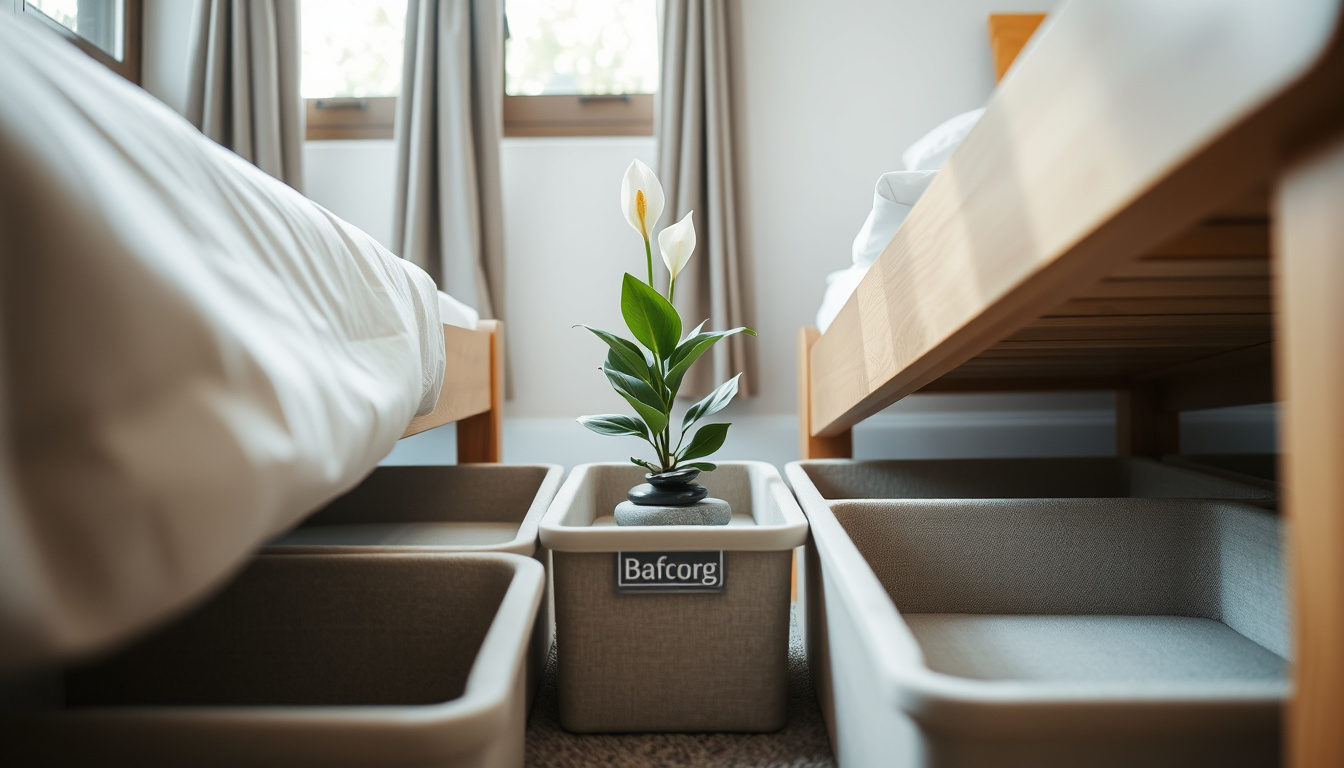
Anyone who has wrestled with a bedroom that feels half its actual size has probably eyed the dark void under the bed and thought: there has to be a way to use that space. Under bed storage is one of the most debated organizing strategies — it can be either a clutter tamer or a dust trap, depending on what goes there and how you do it. This guide brings together Feng Shui wisdom, the practical German method, and modern container solutions to help you decide what to stash, what to skip, and how to keep the energy (and the dust) under control.
Average capacity per container: 60 liters ·
Bedrooms using under bed space: estimated 45% ·
Min bed clearance for storage: 6 inches (15 cm) ·
Feng Shui principle: blocking chi flow
Quick snapshot
- Feng Shui sources discourage under bed storage because it blocks chi flow (Livingetc (home design publication))
- The German method emphasizes organized, limited storage under the bed (Moon FengShui Consulting (Feng Shui consultancy))
- Japanese people traditionally sleep on futons on tatami mats without bed frames (Apartment Therapy (home improvement publication))
- Exact percentage of bedrooms using under bed storage (LoveToKnow (lifestyle and Feng Shui resource))
- Scientific studies on dust mite populations under beds (Feng Shui by Bridget (Feng Shui blog))
- Precise historical origin of the “German bed method” term (The Qi Flow (Feng Shui blog))
- The exact benefit of reflective storage boxes for chi flow (LoveToKnow (lifestyle and Feng Shui resource))
- Keep space under the bed empty for restful sleep (Livingetc (home design publication))
- If storage is necessary, use oval or round boxes to reduce negative effects (LoveToKnow (lifestyle and Feng Shui resource))
- Store only neutral, clean items like extra bedding and seasonal clothing (Moon FengShui Consulting (Feng Shui consultancy))
- Wheeled containers for easy access under low beds (IKEA (furniture retailer))
- Vacuum-sealed bags for bulky off-season items (Amazon (online retailer))
- Clear plastic bins for visibility without pulling out (JYSK (home goods retailer))
Five key facts, one pattern: Feng Shui practitioners largely advise against under bed storage, but offer remedies if you must use the space.
| Label | Value |
|---|---|
| Standard under bed storage box capacity | 60 liters (typical) |
| Minimum bed clearance for standard containers | 6 inches (15 cm) |
| Feng Shui view on under bed storage | Discouraged—blocks energy flow |
| German bed method origin | Practical minimalism, orderly storage |
| Japanese bed frame usage | Traditional futons on floor, no frames |
| Best container material (Feng Shui) | Solid wood (cedar boxes or built-in drawers) (The Qi Flow (Feng Shui blog)) |
| Alternative storage (Feng Shui) | Vertical floor-to-ceiling cabinets (Moon FengShui Consulting (Feng Shui consultancy)) |
| Recommended cleaning frequency | Regularly (dust and energy accumulate quickly) (Moon FengShui Consulting (Feng Shui consultancy)) |
Is under bed storage a good idea?
Under bed storage can be a practical solution for small spaces, but it comes with trade-offs. The following pros and cons summarize the key points.
Pros and Cons of Under Bed Storage
Upsides
- Frees up closet and floor space
- Perfect for off-season and rarely used items
- Low cost solution — many containers under $30
Downsides
- Blocks airflow and can trap dust, mold
- Feng Shui: disrupts chi and sleep quality
- Difficult to access items stored in back
The pattern shows that while under bed storage offers space savings, it requires careful selection of items and containers to avoid drawbacks.
Is it bad Feng Shui to have storage under bed?
Feng Shui principles are clear: blocking the space under your bed is said to interrupt qi (energy flow) and affect sleep quality. Livingetc (home design publication) quotes Feng Shui educator Laura Morris: “Items with active energy, such as exercise equipment or old crutches, should be kept away from under the bed.” Consultant Anjie Cho adds that storing books under the bed is discouraged.
Feng Shui principles and chi flow
- Clutter under the bed creates stagnant chi (LoveToKnow (lifestyle and Feng Shui resource))
- Beds that extend to the floor with no space underneath are also not ideal — qi needs to flow around you (Livingetc (home design publication))
- Apartment Therapy notes that storing things under the bed blocks energy and air circulation.
Exceptions and solutions for better energy
- If you must use the space, LoveToKnow recommends oval or round boxes to soften sharp corners.
- Reflective storage boxes are suggested as a way to reduce stagnant chi.
- Moon FengShui Consulting advises storing only neutral, clean items such as fresh bedding, extra pillows, and soft seasonal clothing.
What not to store under the bed?
Some items simply don’t belong under the bed — for practical reasons like moisture, pests, or mold, and for Feng Shui reasons like stagnant energy. Here’s the list of what to avoid.
Food and perishables
- Attracts pests and creates mess.
- Feng Shui sources: active energy items like food interfere with rest.
Electronics and batteries
- Can overheat or be damaged by dust (LoveToKnow)
- Feng Shui: electronics carry strong active energy.
Important documents and photos
- Risk moisture and mold damage (Apartment Therapy)
- Feng Shui: sentimental items under the bed can create emotional stagnation.
Heavy items that are difficult to move
- Discourage regular cleaning and under-bed maintenance.
- Make access difficult when you need to rotate stored items.
The implication: avoid anything perishable, electronic, sentimental, or heavy. Stick with neutral, light, and easy-to-move items.
What is the best thing to store under the bed?
Feng Shui consultants and organization experts agree that neutral, clean items such as seasonal clothing, extra bedding, towels, and travel bags are appropriate for under bed storage. These items do not carry active energy and are less likely to trap moisture or attract pests. Use clear, wheeled containers for easy access. (Livingetc, Moon FengShui Consulting)
What is the German bed method?
The German bed method is a practical, minimalist approach to under bed storage. It involves using organized containers to store only specific items, keeping the space tidy and functional.
The German under bed storage practice
- Emphasises practicality and minimalism (Moon FengShui Consulting (Feng Shui consultancy))
- Uses low-profile, wheeled containers for easy access
How to implement the German method
- Measure bed clearance (minimum 6 inches for standard boxes)
- Choose clear, lidded bins so you can see contents without pulling out
- Store off-season clothing, extra linens, and travel bags
- Label each container for quick identification
The German method is essentially organized common sense. For the average household, it’s the most practical middle ground between Feng Shui purists and clutter chaos.
Why do Japanese people not use bed frames?
Traditional Japanese sleeping arrangements involve a futon placed directly on tatami mats. This practice saves space, simplifies storage, and aligns with Feng Shui principles of clear floor area.
Traditional Japanese futon and floor sleeping
- Futons are folded and stored during the day, freeing up living space (Apartment Therapy (home improvement publication))
- No bed frame means no under bed space to accumulate clutter or dust
Space saving and simplicity
- Floor sleeping is ideal for small Japanese apartments
- It eliminates the need for bulky storage containers under the bed
Feng Shui connection
- Keeping the floor clear allows chi to flow freely (LoveToKnow (lifestyle and Feng Shui resource))
- Futons are easy to air and clean, reducing moisture and dust mite issues
What this means: the Japanese approach is the ultimate expression of Feng Shui principles — no under bed space means no storage dilemma. For those committed to pure energy flow, floor sleeping is worth considering.
What are the best under bed storage containers?
Choosing the right container depends on your bed height, what you’re storing, and how often you need access. Here’s a breakdown of the most popular options.
Six container types, one pattern: the right choice balances accessibility, visibility, and Feng Shui compatibility.
| Type | Height | Material | Visibility | Ease of access | Best use |
|---|---|---|---|---|---|
| Wheeled bins | 5–7 in | Plastic | Clear/ opaque | Very easy (pull out) | Heavy items, frequent access |
| Low profile boxes | 3–5 in | Plastic | Clear lid | Moderate (slide) | Tight clearance beds |
| Clear plastic bins | 6–8 in | Plastic | Full clear | Moderate (lift) | Seasonal clothing, linens |
| Vacuum seal bags | 2–4 in (compressed) | Plastic | Unclear | Easy (compress) | Bulky off-season items |
| Cedar boxes | 5–7 in | Wood | Solid | Moderate (pull) | Feng Shui enthusiasts, moth protection |
| Built-in drawers | Custom | Wood/ composite | Hidden | Very easy (drawer slides) | Permanent storage solution |
Under bed storage with wheels
- Wheeled containers are easiest to access under low beds (IKEA (furniture retailer))
- Ideal for heavy bins that you need to slide out frequently
Low profile storage boxes for tight clearance
- Less than 6 inches tall — fits under most standard bed frames
- Clear lids let you see contents without pulling out
Clear plastic bins for visibility
- Full transparency eliminates guesswork (JYSK (home goods retailer))
- Stackable designs maximize vertical space
Vacuum sealed bags for bulky items
- Compresses bedding and clothing by 50%+ (Amazon (online retailer))
- Best for off-season comforters, winter jackets, and wool throws
- Seal is not 100% airtight long-term — check monthly
How to Organize Under Bed Storage (Step by Step)
- Measure clearance: Use a ruler to check the gap between floor and bed frame — at least 6 inches for standard containers.
- Declutter first: Remove everything from under the bed and clean the area thoroughly.
- Sort by season and frequency: Keep items you need least in the hardest-to-reach spots.
- Choose containers: Opt for wheeled, clear bins for accessibility; vacuum bags for bulky items.
- Label each container: Use a label maker or masking tape to identify contents without pulling out.
- Limit to neutral items: Seasonal clothing, extra bedding, towels, and travel bags only — avoid electronics, food, and sentimental objects.
- Schedule a clean-out: Every 3–6 months, rotate items and vacuum the under bed area.
Feng Shui consultant Laura Morris suggests that if you must store items under the bed, keep them organized and avoid anything associated with “active energy” like exercise gear or sentimental keepsakes.
Following these steps ensures that under bed storage remains functional and clean.
What’s Confirmed vs. What’s Unclear
Confirmed facts
- Feng Shui discourages under bed storage for chi flow (Livingetc)
- German method emphasizes organized, limited storage (Moon FengShui Consulting)
- Japanese futons on tatami mats avoid the need for bed frames (Apartment Therapy)
What’s unclear
- Exact percentage of bedrooms using under bed storage (LoveToKnow)
- Scientific studies on dust mite populations under beds (Feng Shui by Bridget)
- Precise origin of “German bed method” term (The Qi Flow)
- Effectiveness of reflective boxes for improving chi (LoveToKnow)
The balance of confirmed and unclear facts highlights that under bed storage decisions depend on individual priorities and beliefs.
Expert Perspectives
“Items with active energy, such as exercise equipment or old crutches, should be kept away from under the bed. They carry a certain momentum that can disturb sleep.”
Feng Shui educator Laura Morris, Livingetc
“I don’t recommend storing books under the bed. They carry mental energy and can make your mind feel cluttered while you rest.”
Feng Shui consultant Anjie Cho, Livingetc
“If you must use under bed storage, keep it organized and limited to neutral items like fresh bedding and seasonal clothing. Clean the space regularly.”
Moon FengShui Consulting, Feng Shui consultancy
“Storing things under the bed blocks energy and air from circulating through the room. Even if you can’t see the clutter, your body feels it.”
Apartment Therapy, home improvement publication
The takeaway from these voices is consistent: under bed storage can work, but only if you choose the right items and containers. The experts agree that neutral, organized storage is far better than a chaotic pile.
Summary
Under bed storage is neither inherently good nor bad — it depends entirely on what you store and how you store it. Feng Shui practitioners say leave it empty for restful sleep. The German method says organize it with purpose. Japanese floor sleepers avoid the question altogether by not having a bed frame. For the average bedroom owner, the best approach is a balanced one: use wheeled, clear containers for seasonal items, keep the space clean, and avoid food, electronics, and sentimental clutter. For those concerned about chi, investing in alternative vertical storage or even a floor bed might be the better path.
Frequently asked questions
Can I store shoes under the bed?
Yes, but only in breathable containers like canvas bins or boxes with ventilation. Avoid plastic bags that trap moisture. Feng Shui experts say shoes carry “walking energy” and suggest keeping them in a closet instead.
How often should I clean under the bed?
Moon FengShui Consulting recommends cleaning and decluttering every 3 months because dust and energy accumulate quickly. Vacuum the area when you rotate seasonal items.
Does under bed storage cause mold?
It can, especially in humid climates or if you store items in non-breathable containers. Always use silica gel packs and ensure the under bed area has some airflow. Avoid storing anything damp.
What is the best material for under bed storage boxes?
From a Feng Shui perspective, solid wood (cedar or built-in drawers) is best. For practicality, clear plastic bins with lids offer visibility and dust protection. Vacuum bags are excellent for bulky items.
Can under bed storage help with small bedroom organization?
Absolutely. It’s one of the most effective ways to free up closet and floor space in small bedrooms. The key is to use containers that fit your bed height and to store only items you don’t need daily.
Are vacuum bags safe for storing clothes under the bed?
Yes, for short-term storage (up to 6 months). For longer periods, use cedar chests or cotton storage bags to prevent compression damage to fabrics. Avoid vacuum bags for delicate items like silk or wool.
How do I measure bed clearance for storage containers?
Use a ruler to measure the gap between the floor and the lowest point of the bed frame (including any support slats). Standard under bed boxes require at least 6 inches (15 cm). For low-profile beds, look for containers under 5 inches tall.

Ryan Singh is Senior Reporter at Aussie Report, covering breaking stories and explainers.