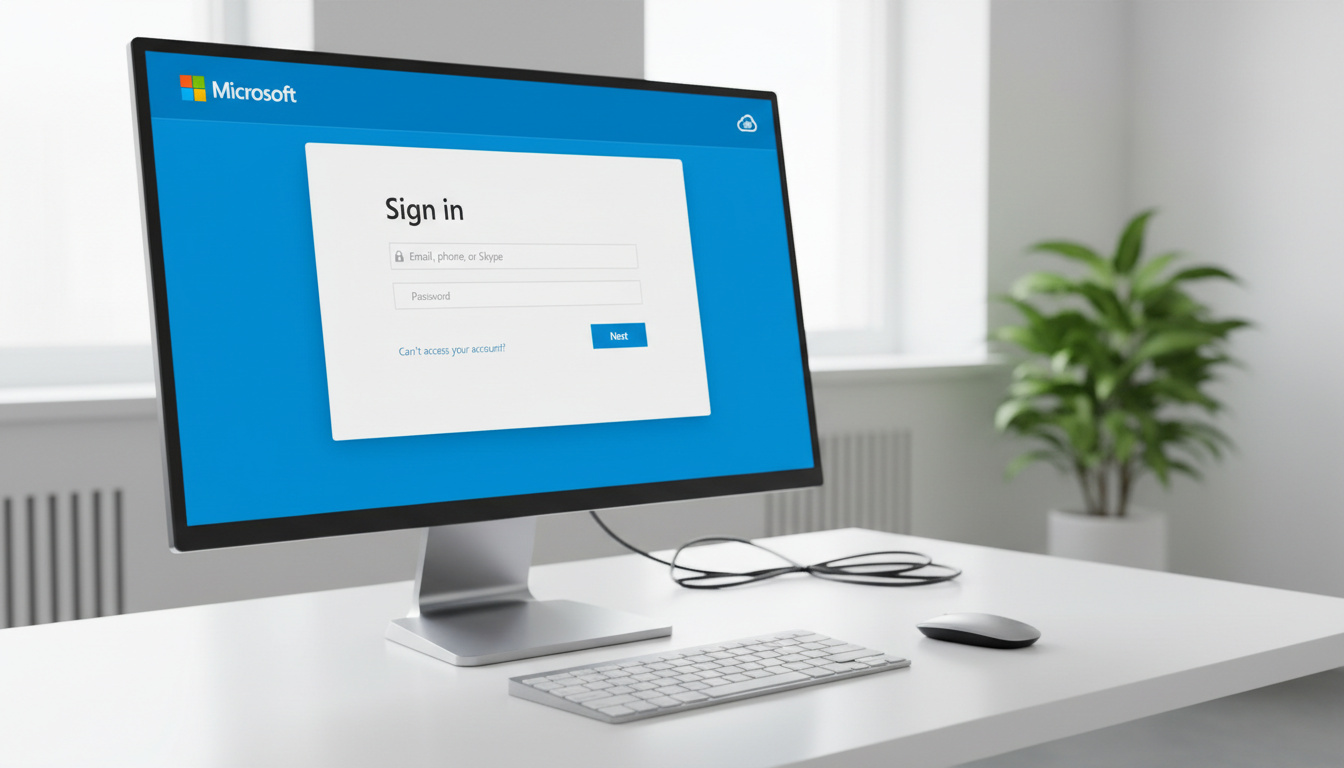

Accessing Outlook email requires navigating to the correct authentication portal and understanding the distinction between personal and enterprise accounts. Microsoft maintains separate entry points for consumer Hotmail and Outlook.com addresses versus corporate Microsoft 365 environments, each with specific security protocols and recovery mechanisms.
The authentication landscape for Outlook has shifted significantly over the past decade, migrating from basic password entry to modern OAuth protocols and mandatory two-factor authentication prompts. Users now encounter layered security measures designed to prevent unauthorized access while occasionally creating friction for legitimate account holders.
This examination draws from Microsoft Learn documentation, official support channels, and verified troubleshooting protocols to establish current best practices for accessing Outlook email across web, desktop, and mobile platforms.
How Do I Log Into Outlook Email?
Microsoft operates distinct authentication portals depending on account type. Personal accounts—including legacy Hotmail, Live.com, and Outlook.com addresses—authenticate through outlook.live.com, while work and school Microsoft 365 accounts utilize outlook.office.com or portal.office.com.
outlook.live.com serves as the entry point for consumer accounts, redirecting legacy Hotmail users automatically.
Enter email address → Password → Sign In button; 2FA prompt follows if enabled.
Account lockouts trigger after multiple failed attempts, requiring 15-30 minute waiting periods according to Microsoft Learn guidance.
iOS and Android devices utilize the Outlook mobile app with OAuth token exchange rather than direct password storage.
Key operational insights:
- Microsoft maintains separate infrastructure for consumer and enterprise authentication trees.
- Browser cache congestion constitutes a primary driver of repetitive sign-in failures.
- Two-factor authentication generates app passwords exclusively for legacy applications.
- Desktop clients cache credentials locally, occasionally requiring service-level resets.
- Mobile platforms rely on OAuth protocols distinct from web session management.
- Account lockout timers reset with each repeated failed attempt, extending delays up to 24 hours.
- Modern authentication standards have deprecated basic password-only entry for third-party applications.
| Attribute | Specification |
|---|---|
| Personal Login URL | outlook.live.com |
| Work/School Login URL | outlook.office.com or portal.office.com |
| Account Management Hub | account.microsoft.com |
| Personal Password Reset | account.live.com/ResetPassword.aspx |
| Enterprise Password Reset | passwordreset.microsoftonline.com |
| Security Settings | account.microsoft.com > Security > Manage how I sign in |
| Lockout Duration | 15-30 minutes (extendable to 24 hours) |
| Desktop Service | Microsoft Account Signin Assistant |
Why Can’t I Login to My Outlook Email and How to Fix It?
Authentication failures typically stem from three vectors: credential mismatches, client-side cache corruption, or account security locks. Microsoft documentation identifies temporary account lockouts as the most frequent barrier, triggered automatically when algorithms detect potential brute force attempts.
Immediate Troubleshooting Steps
Clearing browser cache and cookies resolves session conflicts where stale tokens prevent authentication handshakes. Users encountering desktop application login loops should open an Incognito or InPrivate browser session, sign in successfully at outlook.live.com, then restart the PC and re-add the account to the desktop client, according to Microsoft Learn recommendations.
Opening an Incognito or InPrivate browser window and signing in at outlook.live.com often resolves persistent desktop app login loops. After successful web authentication, restart your PC and re-add the account to the desktop application.
Windows Service Interventions
Desktop Outlook dependencies occasionally fail when the Microsoft Account Signin Assistant service stalls. Users must navigate to Windows Services, locate the Microsoft Account Signin Assistant, right-click to restart the service, then perform a Quick Repair of Microsoft 365 via Installed apps in Settings to clear corrupted credential caches. Video documentation demonstrates this sequence for Windows-specific authentication glitches.
Account Lockout Protocols
Microsoft security systems impose mandatory waiting periods after failed login sequences. Users must wait 15-30 minutes—or up to 24 hours in severe cases—without attempting additional logins to prevent timer resets. This mechanism, detailed in Microsoft Learn troubleshooting threads, protects against automated attacks but requires patience from legitimate users.
How to Reset Your Outlook Email Password
Password recovery pathways diverge based on account classification. Personal Outlook.com, Hotmail, and Live.com accounts utilize the Self-Service Password Reset portal at account.live.com/ResetPassword.aspx, while organizational Microsoft 365 accounts redirect to passwordreset.microsoftonline.com.
Recovery Verification Requirements
Microsoft requires verification through secondary email addresses, phone numbers, or authenticator app codes before permitting password resets. The Microsoft Account Support tool provides diagnostic assistance by accepting email or phone input to identify specific recovery options available to the user.
Security Information Management
Maintaining current recovery phone numbers and alternative email addresses at account.microsoft.com prevents lockout scenarios where users lack verification channels. Microsoft documentation emphasizes that outdated security information constitutes the primary barrier to successful self-service recovery.
Outlook Login on Mobile and Desktop Differences
Authentication methodologies vary significantly across platforms, with mobile applications utilizing OAuth token exchanges while desktop clients rely on cached credentials and Windows service integrations.
Mobile Authentication Flow
Android and iOS Outlook applications route users through OAuth screens rather than native password entry, generating persistent tokens that reduce repeated authentication prompts. When mobile login issues arise, users should verify app passwords generated at account.microsoft.com for applications requiring legacy authentication.
For Windows desktop authentication failures, search for “services” in Windows, locate the Microsoft Account Signin Assistant, right-click and restart. Follow this with a Quick Repair of Microsoft 365 via Installed apps in Settings to resolve corrupted credential issues.
Desktop Client Specifics
Windows desktop Outlook occasionally enters authentication loops where cached credentials conflict with updated passwords. Documentation indicates that correcting these issues requires service-level intervention alongside application repairs.
Always verify you are on official Microsoft URLs (outlook.live.com, outlook.office.com, or account.microsoft.com) before entering credentials. If locked out, use the account.microsoft.com recovery form rather than following links from emails.
How Has Outlook Email Login Changed Over Time?
The authentication infrastructure supporting Outlook email has undergone substantial transformation from basic password entry to multi-layered security frameworks.
-
Hotmail.com served as the primary domain for consumer email authentication.
-
Microsoft rebranded consumer email under Outlook.com, introducing modern authentication protocols.
-
Two-factor authentication options became available for enhanced account protection.
-
Microsoft initiated broad enforcement of mandatory 2FA for high-risk accounts.
-
Enhanced phishing protection and modern authentication requirements deprecated legacy basic auth.
What Is Established vs. Uncertain About Outlook Login?
- Official URLs: outlook.live.com (personal) and outlook.office.com (enterprise)
- Lockout durations: 15-30 minutes minimum
- Recovery portals: account.live.com for personal accounts
- 2FA requirement for app password generation
- Exact algorithmic triggers for extended 24-hour lockouts
- Specific backend thresholds for brute force detection
- Regional variations in authentication server routing
- Third-party application compatibility timelines
Why Does Outlook Email Login Security Matter?
Microsoft Outlook functions as the primary authentication gateway for broader Microsoft ecosystem access, including OneDrive, Azure, and productivity applications. Compromised email credentials potentially expose entire organizational networks to lateral movement by threat actors.
The integration of Outlook authentication with enterprise systems like ATO Business Portal Login Access demonstrates how email credentials increasingly serve as universal keys for government and corporate resource access. This centrality necessitates robust two-factor authentication and vigilant phishing detection.
Modern authentication standards now require OAuth tokens rather than stored passwords, reducing—but not eliminating— credential theft risks. Users must remain aware that Microsoft never requests passwords via email, and that official recovery processes always route through account.microsoft.com or verified support channels.
What Do Microsoft’s Official Sources Say About Authentication?
“Wait 15-30 minutes (or up to 24 hours) after failed attempts, as accounts temporarily lock for security; avoid repeated tries to prevent timer resets.”
— Microsoft Learn Documentation
“Enable two-step verification or two-factor authentication at account.microsoft.com > Security > Manage how I sign in; generate app passwords there for apps blocking modern auth.”
— Microsoft Community Guidance
How Can You Maintain Secure Access to Outlook Email?
Establishing reliable Outlook email access requires maintaining current security information at account.microsoft.com, enabling two-factor authentication, and recognizing that official URLs remain constant despite interface updates. Users experiencing persistent issues should utilize Microsoft’s sign-in diagnostic tool before attempting third-party fixes. Those monitoring international financial flows while managing email security may reference current One AUD to INR exchange rates for related business considerations.
Frequently Asked Questions
Is outlook.live.com the official login for personal accounts?
Yes. Microsoft operates outlook.live.com as the primary authentication portal for personal Outlook.com, Hotmail, and Live.com accounts, while enterprise users access outlook.office.com.
How does Outlook two-factor authentication work?
Users enable 2FA at account.microsoft.com under Security settings, then verify identity via SMS codes or authenticator apps. App passwords become required for legacy applications unable to use modern authentication.
Why does my Outlook desktop app repeatedly ask for passwords?
Cache corruption typically causes authentication loops. Restart the Microsoft Account Signin Assistant service in Windows Services, then perform a Quick Repair of Microsoft 365.
Can I recover my Outlook account without a phone number?
Recovery requires alternate verification methods established during account setup, such as secondary email addresses. Without these, Microsoft Support may require extended identity verification.
What is the difference between Outlook.com and Hotmail login?
There is no functional difference; Hotmail addresses automatically redirect to outlook.live.com and authenticate through the same Microsoft account infrastructure as Outlook.com addresses.
How long do Outlook account lockouts last?
Standard lockouts last 15-30 minutes, though repeated failed attempts can extend this to 24 hours. Each additional attempt resets the timer.
Are Outlook mobile app passwords different from web passwords?
The mobile app uses your standard password, though it authenticates via OAuth tokens. App passwords are only needed for third-party mail clients unable to support modern authentication.
Related stories





Liam O'Brien covers Australian politics and public affairs for Aussie Report.