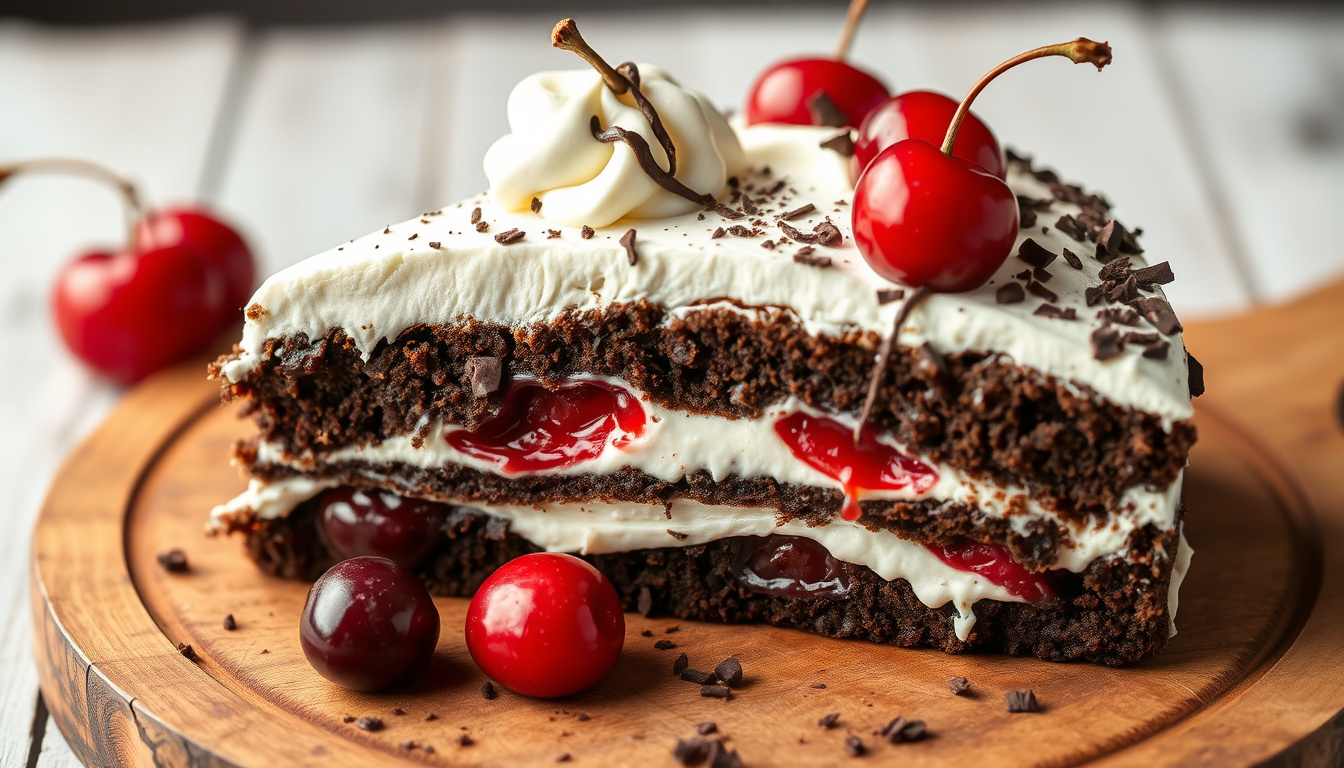
Schwarzwälder Kirschtorte, more widely known as Black Forest cake, ranks among Germany’s most celebrated desserts. This layered confection combines chocolate sponge cake, Morello cherries, Kirschwasser cherry brandy, and billowing whipped cream into a showpiece that has conquered pastry shops worldwide. The recipe demands precision and patience, yet home bakers equipped with basic techniques can achieve impressive results.
The dessert takes its name from the Black Forest region in southwestern Germany, famous for its cherry orchards and the clear brandy distilled from their fruit. Unlike simpler chocolate cakes, Black Forest cake requires assembling multiple components—each contributing texture, flavor, and structural integrity. Understanding the role each element plays transforms this project from intimidating to manageable.
This guide walks through the traditional method while acknowledging practical adaptations. Whether pursuing strict authenticity or accommodating dietary restrictions, the core principles remain consistent: a tender chocolate base, properly prepared cherry filling, stable whipped cream, and careful assembly. The result rewards both the maker and those fortunate enough to share it.
How Do You Make Black Forest Cake?
Creating this cake from scratch involves five distinct stages: baking the chocolate sponge, preparing the cherry filling, assembling the layers, frosting the exterior, and decorating. Each stage builds upon the previous one, so timing and preparation matter significantly.
Essential Ingredients
The traditional recipe relies on five foundational components. Chocolate sponge cake forms the structural base, typically a genoise-style batter incorporating eggs, sugar, flour, cocoa powder, and butter. This light, airy cake holds together when soaked without falling apart. The second essential ingredient is Kirschwasser, a clear cherry brandy distilled from the fermented fruit of Black Forest cherry trees. The pits are included during distillation, imparting a subtle bitter almond note that defines the cake’s character.
Morello cherries—either fresh, frozen, or from jars—provide the third component. These dark, slightly tart cherries balance the sweetness of the other elements. The fourth ingredient, whipped cream, appears both between layers and as the exterior frosting. German versions typically use unsweetened whipped cream, though vanilla-scented variations exist. Finally, dark chocolate shavings decorate the finished cake, adding visual contrast and bittersweet flavor.
Step-by-Step Method
- Prepare the chocolate sponge: Beat eggs and sugar until thick and pale, then fold in flour, cocoa, and melted butter. Divide the batter between three greased 8-inch round pans and bake at 350°F (175°C) for approximately 20 minutes until a toothpick inserted in the center comes out clean.
- Create the cherry filling: Drain jarred Morello cherries, reserving the syrup. Combine cherries with sugar and a gelling agent such as gelatin or cornstarch slurry. The mixture should thicken enough to hold its shape between layers.
- Prepare the soaking syrup: Mix Kirschwasser with the reserved cherry syrup in equal parts. This liquid refreshes the chocolate sponge’s flavor and adds moisture without making it soggy.
- Whip the cream: Chill your bowl and whisk attachment thoroughly. Whip heavy cream to soft peaks, sweetening slightly if desired. Work quickly to maintain volume.
- Assemble the cake: Place the first cake layer on your serving plate. Brush generously with Kirsch syrup, then spread a portion of the cherry filling followed by whipped cream. Repeat with remaining layers, finishing with a thin crumb coat of cream. Refrigerate for 30 minutes.
- Final frosting and decoration: Cover the entire cake with the remaining whipped cream, creating a smooth or rustic finish as preferred. Press chocolate shavings along the sides and arrange whole cherries on top.
- Use room-temperature eggs for maximum volume when whipping the batter.
- Chill your cream and equipment before whipping to ensure stability.
- Drain cherries thoroughly—excess liquid saturates the sponge unevenly.
- Select tart Morello cherries rather than sweet varieties for proper flavor balance.
- Dark chocolate shavings provide better visual contrast against white cream.
- Allow the assembled cake to set in the refrigerator before serving.
- Kirsch contributes essential flavor, though alternatives exist for those avoiding alcohol.
| Specification | Details |
|---|---|
| Calories per slice | Approximately 450 |
| Primary alcohol | Kirschwasser (cherry brandy) |
| Standard pan size | Three 8-inch round pans |
| Refrigerated shelf life | 3–5 days |
| Freezer storage | Up to 1 month (sliced) |
| Room temperature limit | 2 hours maximum |
| Typical serving size | 12 slices from standard recipe |
Starting with a quality boxed chocolate cake mix speeds preparation considerably. Enhance the mix by adding extra cocoa powder and replacing water with cherry juice for additional flavor depth. While not traditional, this approach produces satisfying results for novice bakers.
What Is Black Forest Cake?
Black Forest cake is a layered chocolate cherry torte originating from the Black Forest region in Baden-Württemberg, Germany. The dessert exemplifies the region’s agricultural treasures: locally grown cherries, cherry brandy distilled from those same orchards, rich dairy cream, and cocoa from traded goods. Its construction involves stacking soaked chocolate sponge layers with Morello cherry filling and whipped cream, finished with chocolate curls and whole cherries.
The name Schwarzwälder Kirschtorte directly translates to “Black Forest Cherry Torte,” though international versions often bear little resemblance to the authentic German original. The designation references both the Kirschwasser derived from regional cherries and possibly the traditional black, white, and red costumes worn by local residents or the distinctive bollenhut headwear featuring inverted cherries.
Origins and Historical Development
The cake’s invention remains disputed among historians and pastry enthusiasts. The earliest documented appearance of the term “Schwarzwälder Kirschtorte” occurred in 1915, published in Brandenburg an der Havel. Most sources credit Josef Keller, a trained pastry chef who worked at Café Ahrend in Bad Godesberg (now part of Bonn). Keller claimed he created the cake around 1915, combining Kirsch schnapps, whipped cream, and cherries in a layered format.
Keller later relocated to Radolfzell, where the first written recipe from 1927 remains archived. His apprentice August Schaefer carefully preserved the original formulation, passing it to his son Claus Schaefer, who operated a confectionery in Triberg. Alternative claims suggest Tübingen resident Erwin Hildenbrand invented the cake around 1930, or that Edwin Hildebrand documented it in 1934.
The cake gained substantial popularity during the 1920s and 1930s, appearing in JM Erich Weber’s 1934 cookbook and Dr. Oetker’s widely distributed 1951 recipe collection. By mid-century, Black Forest cake had become a fixture throughout Germany, particularly in Berlin. The European Union granted geographical indication protection to the name in 2013, requiring authentic versions to use Kirsch sourced from Black Forest cherries.
Traditional Characteristics
Authentic Schwarzwälder Kirschtorte differs markedly from the overly sweet versions exported internationally. The chocolate sponge should be light and tender, never dense or overwhelmingly chocolatey. Kirschwasser provides the signature flavor—distinctly cherry with subtle almond notes from the distillation process—while the cream remains unsweetened or only lightly sweetened to preserve the fruit’s tartness.
In 2013, the European Union granted geographical indication protection to Schwarzwälder Kirschtorte. Producers using the authentic name must source their Kirsch from the Black Forest region, ensuring the dessert maintains its regional identity and traditional production methods.
Can You Make Black Forest Cake Without Alcohol?
Absolutely. While Kirschwasser defines the traditional version’s character, numerous adaptations produce excellent results without any alcohol content. These alternatives prove essential for serving to children, individuals avoiding alcohol for religious or health reasons, or when simply preferring non-alcoholic desserts.
Alcohol-Free Substitutions
The most straightforward replacement involves substituting Kirsch with additional cherry syrup or cherry juice. Combining reserved Morello cherry syrup with a splash of water or white grape juice approximates the sweetness and fruit intensity without alcohol’s complexity. Some bakers add a few drops of almond extract to replicate the subtle bitter almond note Kirsch contributes.
Commercially available alcohol-free Kirsch alternatives have emerged in response to demand, though quality varies considerably. When using these products, taste the mixture first and adjust sweetness accordingly. The replacement should provide cherry flavor without excessive added sugar that would overwhelm the other components.
Dietary Variations
Eggless and vegan adaptations have become increasingly accessible. For egg-free sponges, aquafaba—the liquid from canned chickpeas—whips into stable peaks similar to egg whites and provides structure when folded into the batter. Flax eggs (ground flaxseed combined with water) offer another option, though they produce a denser result.
Vegan versions substitute coconut cream for dairy whipped cream, achieving similar texture with a slightly tropical undertone. Plant-based dark chocolate satisfies dairy-free requirements for both the sponge and decorations. The cherry filling adapts naturally, as Morello cherries and their syrup contain no animal products.
Troubleshooting Common Issues
Several problems frequently arise during Black Forest cake preparation. Soggy layers typically result from over-soaking the sponge or using cherries with excess liquid. Pat drained cherries dry and measure soaking syrup carefully to prevent this issue. A dry, crumbly sponge suggests insufficient butter in the batter or over-baking—test doneness several minutes before the timer indicates completion.
Whipped cream that deflates rapidly usually indicates over-whipping or a warm bowl and utensils. Chill everything thoroughly before beginning, and stop whipping as soon as soft peaks form. Adding a small amount of unflavored gelatin dissolved in warm water stabilizes the cream for longer periods.
American-style “German chocolate cake” bears no relation to Schwarzwälder Kirschtorte. The former features chocolate cake with coconut-pecan frosting, named for German’s chocolate brand rather than Germany itself. This mix-up frequently causes confusion when people search for authentic recipes.
How Long Does Black Forest Cake Last?
Black Forest cake’s shelf life depends significantly on its perishable components—primarily the whipped cream and fresh cherries. Stored properly in refrigeration, the cake remains fresh for three to five days. Beyond this window, the cream begins to weep moisture and the sponge loses its tender texture.
Proper Storage Methods
Always store Black Forest cake in an airtight container or cover it tightly with plastic wrap to prevent the refrigerator’s ambient odors from being absorbed into the cream. Place the cake on the coldest shelf, typically near the back, maintaining consistent temperature. Before serving leftover portions, allow the cake to sit at room temperature for approximately 15 minutes—this allows the flavors to open up and the texture to soften.
For longer preservation, individual slices freeze remarkably well. Wrap each slice tightly in plastic wrap, then aluminum foil, and place in freezer bags. Frozen cake maintains quality for up to one month. Thaw frozen slices gently in the refrigerator overnight rather than at room temperature, which prevents condensation from forming on the cream surface.
Safety Considerations
Due to the dairy content, Black Forest cake should never remain at room temperature for more than two hours. After this window, bacterial growth becomes concerning, particularly in warm environments. If the cake has been left out accidentally, err on the side of caution and discard remaining portions rather than risking foodborne illness.
When transporting the cake—particularly during warm weather—use insulated coolers with ice packs to maintain temperature. For events where refrigeration isn’t immediately available, consider preparing components separately and completing final assembly on-site.
A Timeline of Black Forest Cake’s Development
The history of this celebrated dessert spans roughly a century, with competing claims and gradual international spread. Understanding the timeline helps contextualize authenticity debates and regional variations.
- 1915: The earliest documented reference to Schwarzwälder Kirschtorte appears in Brandenburg an der Havel. Josef Keller reportedly creates an early version at Café Ahrend in Bad Godesberg.
- 1927: The first written recipe is archived at Keller’s establishment in Radolfzell. His apprentice August Schaefer preserves the formulation.
- 1934: JM Erich Weber publishes the cake in his cookbook, bringing wider attention to the recipe.
- 1951: Dr. Oetker includes the recipe in their influential cookbook, cementing the cake’s status across Germany.
- 1950s–1960s: The cake spreads internationally, though adaptations often diverge significantly from German tradition.
- 1970s: Discussions regarding cultural heritage status and potential UNESCO recognition emerge in Germany.
- 2013: The European Union grants geographical indication protection to Schwarzwälder Kirschtorte, requiring authentic production methods.
Established Facts Versus Uncertainties
Examining what scholars and bakers definitively know versus what remains debated provides clarity on the cake’s true nature.
| Established Information | Uncertainties and Debates |
|---|---|
| The cake originated in Germany and takes its name from the Black Forest region. | The precise inventor remains disputed—Josef Keller versus alternative claimants. |
| Kirschwasser (cherry brandy) is the traditional spirit component. | Whether the cake was created in 1915 or evolved gradually from existing desserts. |
| The recipe gained widespread German popularity by the 1950s. | The significance of regional costumes and bollenhut headwear to the name’s origin. |
| EU geographical indication protection was granted in 2013. | Whether certain early references describe modern-style Black Forest cake versus ancestor versions. |
| Authentic versions require chocolate sponge, Morello cherries, Kirsch, and whipped cream. | The extent to which international versions influenced (or diluted) German tradition. |
The Black Forest Region and Its Culinary Significance
The Black Forest (Schwarzwald) spans approximately 160 kilometers along Germany’s southwestern border with France. This forested mountain region has long produced specialty foods and beverages tied to its climate and agricultural traditions. Cherry cultivation thrives in the volcanic soil and moderate temperatures, producing fruit prized for both fresh eating and distillation.
Kirschwasser represents one of several regional brandies, though it holds particular cultural importance. The spirit is produced by fermenting whole Morello cherries—including the pits—before distilling. The pits impart characteristic bitter almond notes that distinguish genuine Black Forest Kirsch from generic cherry brandy. This specificity explains why the EU protection designation focuses on the spirit’s regional sourcing.
Beyond the cake, the Black Forest region offers related culinary traditions worth exploring. Schwarzwalder Schinken (Black Forest ham), schnitzel variations, and distinctive breads complement the area’s pastry heritage. The combination of forested mountains, traditional villages, and gastronomic specialization makes the region a destination for food-focused travelers.
What Bakers Say About Authentic Preparation
Professional perspectives illuminate the craft involved in traditional preparation.
“The chocolate sponge must be featherlight—a heavy cake will overwhelm the delicate cherry-cream balance. Every layer should barely register on the tongue before the Kirsch and cherry flavors arrive.”
“Using quality Kirschwasser isn’t optional for authenticity. The cherry-almond complexity simply cannot be replicated with artificial substitutes. That said, the spirit should never dominate—it whispers rather than shouts.”
These perspectives emphasize restraint and balance over spectacle. The best Black Forest cakes achieve harmony rather than individual component dominance.
Summary
Black Forest cake represents Germany’s most recognizable contribution to world pastry arts. The combination of chocolate sponge, Morello cherries, Kirschwasser, and whipped cream creates a dessert that balances sweetness, fruit intensity, and subtle alcohol warmth. While its invention remains partially disputed, the core elements have remained consistent for over a century.
Home preparation requires patience and attention to detail, but the process rewards careful execution. Alcohol-free variations accommodate various dietary needs while preserving the essential cherry-chocolate character. Properly stored, the cake keeps for several days, though its freshest state occurs within the first 48 hours after assembly.
Whether pursuing strict authenticity or adapting to circumstance, the principles remain constant: quality ingredients, careful assembly, and respect for the delicate balance that has made this cake enduringly popular. For those interested in further exploring regional dessert traditions, resources on cheese cake shops in Syracuse and similar destinations offer additional culinary exploration opportunities.
Frequently Asked Questions
What can I substitute for Kirsch in Black Forest cake?
Cherry syrup mixed with a small amount of water or white grape juice works well. Adding a few drops of almond extract helps replicate Kirsch’s characteristic bitter almond notes.
Can I make Black Forest cake ahead of time?
Yes. Bake the sponge layers a day in advance, wrap them airtight, and refrigerate. Prepare cherry filling up to two days ahead. Complete assembly and frosting the day you plan to serve for optimal freshness.
Is Black Forest cake gluten-free?
The traditional recipe contains wheat flour. Gluten-free alternatives using almond flour or rice flour produce acceptable results, though texture differs from the original.
Why did my whipped cream collapse?
Over-whipping causes cream to deflate and separate. Ensure your equipment is thoroughly chilled and stop whipping as soon as soft peaks form. Stabilizing with dissolved gelatin helps for longer periods.
What’s the difference between Morello and regular cherries?
Morello cherries are darker, smaller, and more acidic than sweet cherries. Their tartness provides essential flavor balance against the sweet cream and sponge. Sweet cherries can overwhelm the other components.
How many layers should Black Forest cake have?
Traditional recipes specify three layers of sponge cake. Some contemporary versions use two thicker layers, though three provides better proportion between cake, filling, and cream in each slice.
Can I freeze assembled Black Forest cake?
Sliced portions freeze well for up to one month when wrapped tightly. Thaw overnight in the refrigerator. The cream texture may change slightly upon thawing, but the cake remains palatable.
Is Black Forest cake the same as German chocolate cake?
No. American “German chocolate cake” features chocolate cake with coconut-pecan frosting and has no connection to Schwarzwälder Kirschtorte beyond sharing the word “German” in its marketing.

Rachel Walsh leads fact-checking, source verification and corrections at Aussie Report.