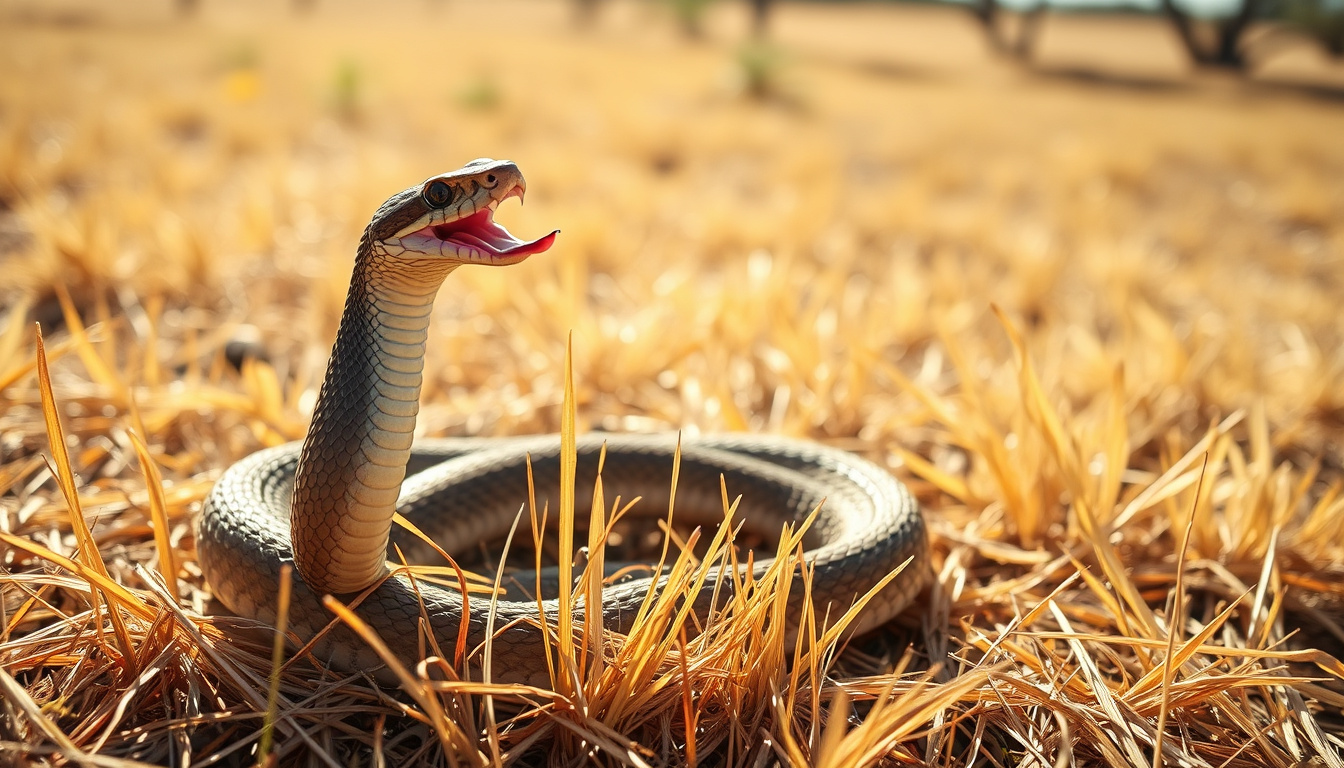
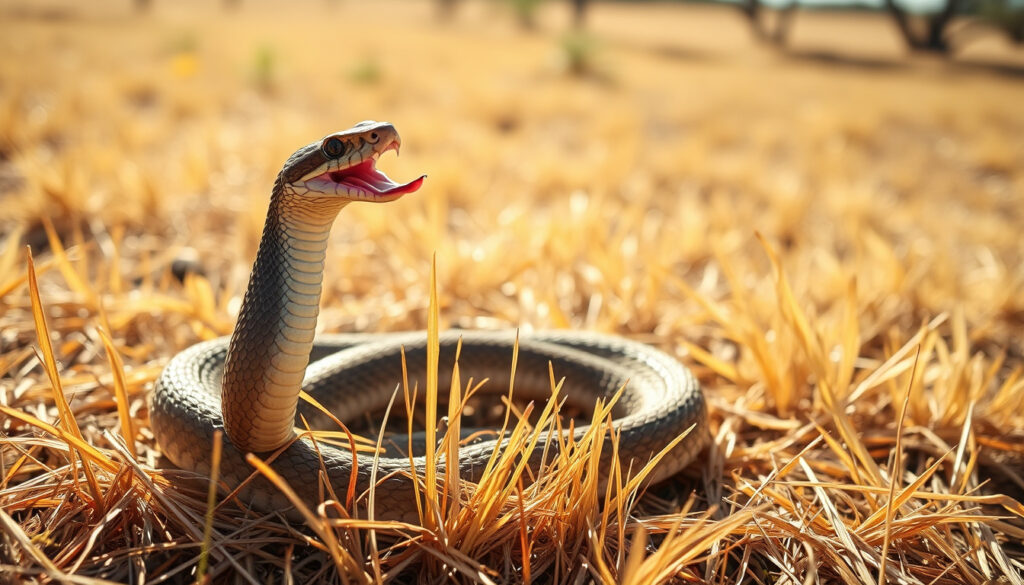
Living in eastern Australia means sharing the land with the eastern brown snake – a reptile that causes more snakebite deaths on the continent than any other. With venom second only to the inland taipan (LD50 as low as 0.036 mg/kg), we separate fact from fear with real numbers on venom strength, bite symptoms, survival odds, and encounter response.
Scientific name: Pseudonaja textilis ·
Average length: 1.5–2 m (up to 2.4 m) ·
Venom yield (dry weight): 2–4 mg ·
LD50 (subcutaneous, mice): 0.036 mg/kg ·
Distribution: Eastern Australia ·
Estimated annual bites in Australia: ~100–200 (Wikipedia)
Quick snapshot
- Eastern brown snake venom is the second most potent of any land snake (Wikipedia – general reference).
- Antivenom reduces fatality rate to <1% (PMC – clinical study).
- The species is responsible for the majority of snakebite deaths in Australia (Wikipedia – epidemiology).
- Exact number of annual bites attributed to eastern brown snakes is not precisely tracked.
- Whether eastern brown snakes deliberately ‘chase’ humans is debated; observed behavior suggests defensive bluff charges rather than pursuit.
- The evolutionary origin of venom resistance in predators is not fully understood.
- Headache can start within 15 minutes of a bite (Wikipedia – symptoms).
- Clotting abnormalities detectable within 30 minutes (Wikipedia – timeline).
- Collapse or cardiac arrest can occur as early as 2 minutes post-bite (Wikipedia – collapse).
- Apply a pressure immobilisation bandage immediately (Wildlife Victoria – first aid).
- Get emergency medical help – antivenom is highly effective. (Wildlife Victoria – first aid)
- Survival rate with prompt treatment >99% (PMC – antivenom outcomes).
The table below summarizes key identification and venom data.
| Scientific name | Pseudonaja textilis |
|---|---|
| Average adult length | 1.5–2 m (up to 2.4 m) (Wikipedia) |
| Weight | 0.5–1.5 kg |
| Venom LD50 (subcutaneous, mice) | 0.036 mg/kg (Wikipedia – LD50) |
| Distribution | Eastern Australia (QLD, NSW, VIC, SA) (Australian Museum) |
| Conservation status | Least Concern (IUCN) |
How venomous is an Eastern brown snake?
Venom potency compared to other snakes
- The eastern brown snake has the second-most toxic venom of any land snake, after the inland taipan (Wikipedia – venom ranking).
- Its venom is a potent neurotoxin and coagulant that can cause rapid paralysis and uncontrolled bleeding (Wikipedia – venom effects).
- Dry venom yield averages 2–4 mg, with LD50 values indicating extreme toxicity (Wikipedia – yield).
Because the eastern brown snake lives near populated areas, its high toxicity meets high encounter frequency – a combination that makes it Australia’s deadliest snake in practice, even though the inland taipan’s venom is technically more potent.
LD50 and venom yield data
A single comparison puts the numbers in perspective. The table below contrasts the two snakes that top the toxicity charts.
| Aspect | Eastern brown snake | Inland taipan |
|---|---|---|
| Venom toxicity rank | Second most toxic land snake venom (Wikipedia) | Most toxic land snake venom |
| LD50 (subcutaneous, mice) | 0.036 mg/kg (Wikipedia) | 0.025 mg/kg (Wikipedia – Inland taipan) |
| Typical encounter rate | Frequent – inhabits farms, suburbs, bushland (Australian Museum) | Rare – arid, remote regions |
The implication: while the inland taipan has a lower LD50, the eastern brown snake causes far more bites and deaths simply because that’s the snake people actually meet.
What happens if you get bitten by a brown snake?
Immediate symptoms of envenomation
- Symptoms can include headache, nausea, abdominal pain, collapse, and respiratory failure (Wikipedia – human symptoms).
- Venom causes a defibrination syndrome (consumption coagulopathy) leading to uncontrolled bleeding (PMC – coagulopathy).
- In a study of 136 brown snake cases, 80% developed complete venom-induced consumptive coagulopathy (VICC) (PMC – VICC incidence).
A bite may initially feel like a pinprick, and symptoms can be delayed. Many victims underestimate the severity until clotting tests reveal disaster.
Progression of effects over time
- Headache can begin within 15 minutes; clotting abnormalities appear within 30 minutes (Wikipedia – progression).
- Sudden collapse or cardiac arrest can occur as early as 2 minutes post-bite in severe envenomations (OzEMedicine – collapse).
- Without antivenom, death can occur within hours from respiratory paralysis or hemorrhage (Wikipedia – fatal outcomes).
What this means: time is measured in minutes, not hours. Every second between bite and medical care directly affects the outcome.
What are your chances of surviving an eastern brown snake bite?
Survival rates with and without antivenom
- With prompt antivenom treatment, survival rate is >99% (PMC – high survival). In the PMC study of 136 cases, 130 survived (95.6%), with the 6 deaths all involving complete VICC (PMC – mortality).
- Untreated bites have historically had high fatality; a 1970s study estimated up to 60% mortality before antivenom became widely available (Wikipedia – historical mortality).
- In dogs, survival to hospital discharge for eastern brown snake bites varies by study, with one showing 94% survival (VetTriage – dog outcomes).
Factors influencing outcome
- Bite location (bites closer to the torso are more dangerous).
- Amount of venom injected (dry bites deliver little or no venom).
- Time to medical care and correct first aid (Wildlife Victoria – first aid).
The pattern: survival is almost guaranteed with modern treatment. The real risk is delay – either from not recognizing the bite or from incorrect first aid.
Will a snake chase me if I run?
Snake defensive behavior explained
- Eastern brown snakes are not aggressive towards humans unless threatened; they rarely chase (Wikipedia – behavior).
- Their fast speed is for escape, not pursuit; staying still and backing away slowly is advised (Australian Museum – behavior).
- Running may trigger a chase response if the snake feels cornered, but true pursuit is a myth (Wikipedia – chasing myth).
The snake that kills the most Australians each year is also the one most likely to retreat if given space. Human panic – not snake aggression – is what usually turns an encounter into a bite.
What to do if you encounter an eastern brown snake
- Stop moving and identify the snake from a safe distance.
- Back away slowly – do not make sudden movements.
- Contact a licensed snake catcher for removal (Wildlife Victoria).
The trade-off: the best defense is giving the snake an escape route. The worst response is to pick up a stick or try to kill it – that’s when most bites happen.
What animal is not afraid of snakes?
Predators of the eastern brown snake
- Mongoose, honey badger, secretary bird, and some monitor lizards actively hunt and kill venomous snakes (Wikipedia – snake predators).
- Eastern brown snakes are preyed upon by larger reptiles, birds of prey, and feral cats (Australian Museum – predators).
How these animals overcome venom
- Some predators have evolved resistance to neurotoxins or rely on speed and thick skin (Wikipedia – resistance).
- Large monitor lizards, for example, are immune to the venom of many Australian snakes (Australian Museum – monitor lizards).
Why this matters: natural predators help keep brown snake populations in check, but human encroachment often reduces those predators, leading to more encounters.
First aid for an eastern brown snake bite
- Keep the patient calm and still – movement spreads venom faster.
- Apply a pressure immobilisation bandage over the bite site and then wrap the entire limb firmly (Wildlife Victoria – bandaging).
- Splint the limb to prevent movement.
- Call emergency services (000 in Australia) immediately.
- Do not wash the bite site – hospital staff may need to test venom from the skin.
- Never cut the wound, attempt to suck out venom, or apply a tourniquet.
The upshot: correct first aid buys you the time needed to reach antivenom. Incorrect first aid can make things worse.
What we know and what’s still unclear
Confirmed facts
- Eastern brown snake venom is the second most potent of any land snake (Wikipedia).
- Antivenom reduces fatality rate to <1% (PMC).
- The species is responsible for the majority of snakebite deaths in Australia (Wikipedia – deaths).
What remains unclear
- Exact number of annual bites attributed to eastern brown snakes is not precisely tracked.
- Whether eastern brown snakes deliberately ‘chase’ humans is debated; observed behavior suggests defensive bluff charges rather than pursuit (Wikipedia – behavior debate).
- The evolutionary origin of venom resistance in predators is not fully understood.
- Exact survival rate in dogs after eastern brown snake bites varies between studies, indicating uncertainty (VetTriage – dog variability).
The implication: even with good data, gaps remain, especially when comparing human and veterinary outcomes across different regions.
Quotes from experts
“The eastern brown snake is considered the second-most venomous land snake after the inland taipan.”
— Wikipedia, Eastern brown snake entry (general reference)
“[Pseudonaja textilis] is a highly variable species in colour and pattern, which often leads to misidentification.”
— Australian Museum, Eastern Brown Snake species profile
“If you suspect a snake bite, keep calm and apply a pressure immobilisation bandage immediately.”
— Wildlife Victoria, Eastern Brown Snake fact sheet
“The inland taipan’s venom is so potent that it can kill an adult human in under an hour, but encounters are extremely rare.”
— Australia Zoo, Inland Taipan page (comparison context)
These expert sources confirm the snake’s high toxicity while emphasizing the rarity of encounters compared to the eastern brown snake.
Summary
The eastern brown snake is the most medically significant snake in eastern Australia not because its venom is the strongest on paper, but because it lives where people live. For anyone in its range, the implication is clear: learn the correct first aid, give the snake space when you see it, and reach emergency care fast. The alternative – delay or panic – is the one factor that turns a survivable bite into a tragedy.
Frequently Asked Questions
How fast can an eastern brown snake move?
Eastern brown snakes can move at speeds up to 3–4 km/h over short distances. This speed is primarily for escape, not pursuit.
What does eastern brown snake venom do to the blood?
The venom contains prothrombinase complex pseutarin-C, which depletes the body’s clotting factors, causing a consumptive coagulopathy that leads to uncontrollable bleeding (Wikipedia).
Are eastern brown snakes aggressive?
No. They are defensive rather than aggressive. Most bites occur when the snake is stepped on or cornered. Backing away slowly is the recommended response.
How can I identify an eastern brown snake?
They have a slender body, a small head, and variable brown or orange coloration. The belly is often cream or pinkish. Juveniles may have a black band on the head (Australian Museum).
What should I do if I see an eastern brown snake in my yard?
Keep a safe distance, keep pets and children indoors, and call a professional snake catcher. Do not attempt to kill or capture the snake.
Do eastern brown snakes climb trees?
Yes, they are capable climbers and may climb into low shrubs or trees to bask or hunt, though they are primarily terrestrial.
How often do eastern brown snakes bite humans?
Estimates suggest 100–200 bites occur annually in Australia, though not all result in envenomation. The species accounts for the majority of snakebite fatalities (Wikipedia).
Is there an antivenom for eastern brown snake bites?
Yes, a monovalent brown snake antivenom is available and highly effective. It is stocked in most Australian hospitals and emergency centres (PMC – antivenom).

Rachel Walsh leads fact-checking, source verification and corrections at Aussie Report.