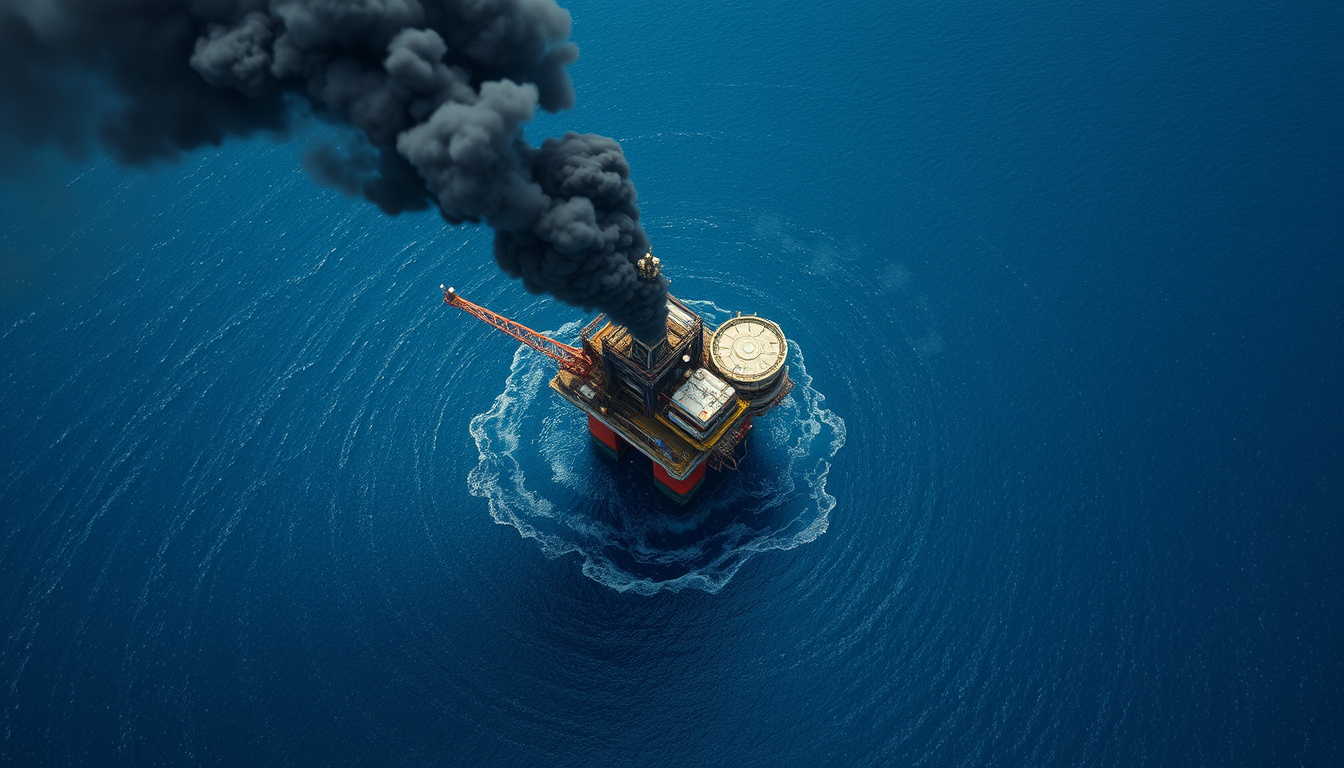
It’s been more than a decade since the Deepwater Horizon rig exploded in the Gulf of Mexico, but the disaster still casts a long shadow — over the families of the 11 workers who died, the thousands of cleanup workers who got sick, and a coastline still waiting for full restoration. The official investigations and court rulings that followed peeled back layers of corporate shortcuts, regulatory blind spots, and disputed responsibility.
Date of explosion: April 20, 2010 · Fatalities: 11 crew members · Oil discharged (estimated): 4.9 million barrels (210 million US gallons) · Duration of leak: 87 days · Total penalties and settlements by BP: Over $65 billion
Quick snapshot
- The explosion was caused by a failure to contain hydrocarbon pressure in the Macondo well. (Wikipedia – free encyclopedia)
- A faulty cement job allowed oil and gas to enter the wellbore. (Britannica – reference publisher)
- BP, Transocean, and Halliburton were all cited for failures. (U.S. Department of Justice – federal prosecutors)
- 11 crew members died. (Britannica – reference publisher)
- The exact chain of commands on the rig that night remains disputed between BP and Transocean. (Pillsbury Law – legal analysis firm)
- Whether a single cause or multiple contributing factors was the chief issue is debated. (Britannica – reference publisher)
- The full long-term health effects on cleanup workers and coastal residents are still being studied. (PBS NewsHour – public broadcaster)
- April 20, 2010: explosion kills 11, rig burns. (Wikipedia – free encyclopedia)
- July 15, 2010: containment cap placed after 87-day leak. (Britannica – reference publisher)
- November 2012: BP pleads guilty to 14 criminal counts. (U.S. Department of Justice – criminal division)
- 2015: historic $20B civil settlement reached. (U.S. Department of Justice – Office of Public Affairs)
- Thousands of health-related lawsuits are stalled in court. (PBS NewsHour – public broadcaster)
- Coastal restoration projects remain incomplete 15 years later. (WWNO – New Orleans public radio)
- BP continues to face class-action claims from workers. (PBS NewsHour – public broadcaster)
A quick look at the core facts of the Deepwater Horizon disaster reveals a pattern of escalating failures — from the rig’s design to the final moments of the blowout.
| Label | Value |
|---|---|
| Rig name | Deepwater Horizon |
| Owner | Transocean |
| Operator | BP |
| Well name | Macondo Prospect |
| Location | Gulf of Mexico, approximately 40 miles off the Louisiana coast |
| Water depth | 5,000 feet (1,500 meters) |
| Date of explosion | April 20, 2010 |
| Total oil released (EPA estimate) | 4.9 million barrels |
What is the true story behind Deepwater Horizon?
The rig and its mission
- The Deepwater Horizon was an ultra-deepwater semi-submersible rig owned by Transocean and operated by BP. (Wikipedia – free encyclopedia)
- It was drilling the Macondo prospect about 40 miles off the Louisiana coast in 5,000 feet of water. (Britannica – reference publisher)
BP had taken over the operation from Anadarko and was behind schedule, under pressure to complete the well. The project was already over budget by millions.
The well was supposed to be sealed with cement and tested for integrity. Instead, the cement job — performed by Halliburton — is now considered the primary trigger for the blowout.
The night of the explosion
- The explosion occurred on April 20, 2010. (Wikipedia – free encyclopedia)
- 11 workers died in the blast; many survivors had only minutes to evacuate. (Britannica – reference publisher)
According to survivor Mike Williams, the chief electronics technician, the rig’s alarm system had been disabled to avoid false alarms, and key safety equipment was out of service. (PBS NewsHour – public broadcaster)
By the time the blowout preventer (BOP) was activated by the crew, it was too late — the BOP had a dead battery and a miswired control pod, a fact that emerged only during the Coast Guard investigation.
The Macondo well blowout
- A faulty cement job allowed oil and gas to enter the wellbore. (Britannica – reference publisher)
- The failure to interpret a negative pressure test correctly was a key error. (Pillsbury Law – legal analysis firm)
The blowout sent a geyser of methane gas up the riser, triggering multiple explosions. The rig burned for 36 hours before sinking, leaving the Macondo well uncapped and bleeding oil into the Gulf for 87 days.
The implication: A chain of preventable failures, not a single error, led to the catastrophe.
Who was at fault for Deepwater Horizon?
BP’s role and decisions
- BP was the majority operator of the Macondo well and hired Transocean and Halliburton. (U.S. Department of Justice – criminal division)
- A district court found that BP’s conduct amounted to gross negligence and willful misconduct. (Pillsbury Law – legal analysis firm)
Investigations revealed that BP repeatedly cut corners to save time and money: using fewer centralizers to stabilize the casing, skipping a planned cement bond log test, and placing cost ahead of safety. (Britannica – reference publisher)
Transocean’s responsibility
- Transocean owned the rig and its crew, including those responsible for the blowout preventer. (Wikipedia – free encyclopedia)
- The BOP was found to have a dead battery and a faulty control pod. (Pillsbury Law – legal analysis firm)
Transocean’s crew also misinterpreted critical pressure test data, according to the U.S. Coast Guard investigation. The company later settled criminal charges by paying $1.4 billion in penalties. (U.S. Department of Justice – Office of Public Affairs)
Halliburton’s cementing work
- Halliburton provided the cementing services for the Macondo well. (Britannica – reference publisher)
- A later investigation found the cement slurry was unstable and did not isolate the well properly. (Pillsbury Law – legal analysis firm)
Halliburton destroyed evidence of the cement tests and agreed to a $1.1 billion settlement with BP. (PBS NewsHour – public broadcaster)
Regulatory failures from MMS
- The Minerals Management Service (MMS) was the federal agency overseeing offshore drilling. (Britannica – reference publisher)
- MMS had been accused of a coziness with industry and lax enforcement of safety regulations. (U.S. Department of Justice – criminal division)
After the disaster, MMS was disbanded and replaced by the Bureau of Ocean Energy Management (BOEM) and the Bureau of Safety and Environmental Enforcement (BSEE). But the pattern of underfunded oversight persists.
The disaster was not caused by a single failure. It was the result of a chain of decisions: BP’s cost-cutting, Transocean’s maintenance lapses, Halliburton’s defective cement, and a regulator that looked the other way. Each broke a link; the system snapped.
How much did BP pay the survivors?
Compensation for victims’ families
- BP established a $20 billion trust fund administered by the Gulf Coast Claims Facility (GCCF). (U.S. Department of Justice – Office of Public Affairs)
- Over 130,000 individual claims were paid for economic losses, property damage, and personal injury. (PBS NewsHour – public broadcaster)
Families of the 11 deceased workers received undisclosed settlements from BP, though some publicly reported sums range from $2 million to $8 million per family. Court records show BP paid over $65 billion in total penalties and settlements across all claims.
Despite the historic settlement, many victims have seen little of that money. A 2023 PBS investigation found that over 22,000 cleanup workers who became ill received an average payout of roughly $1,300 — hardly enough to cover medical bills. (PBS NewsHour – public broadcaster)
Economic damages for businesses and individuals
- Fishermen, tourism operators, and small businesses along the Gulf Coast filed claims for lost income. (PBS NewsHour – public broadcaster)
- The GCCF processed over 600,000 claims and paid out an estimated $6.1 billion. (U.S. Coast Guard – National Pollution Funds Center)
Many businesses complained about slow payments and inadequate documentation requirements, leading to a class-action lawsuit that was eventually settled in 2015.
Total settlement figures
- BP settled with the U.S. Justice Department for $4.5 billion in criminal penalties (including the largest criminal fine in U.S. history at the time) and $5.5 billion in civil Clean Water Act penalties. (U.S. Department of Justice – Office of Public Affairs)
- The 2015 civil settlement with the five Gulf States and the federal government topped $20 billion. (U.S. Department of Justice – Office of Public Affairs)
All told, BP has committed more than $65 billion in fines, penalties, cleanup costs, and compensation — a record for any industrial disaster. (Pillsbury Law – legal analysis firm)
The catch: a record fine cannot replace broken lives and lost livelihoods.
Did anyone go to jail for Deepwater Horizon?
Criminal charges against BP employees
- Two BP employees were indicted on manslaughter charges. (U.S. Department of Justice – criminal division)
- Robert Kaluza, a BP site manager, was charged with 11 counts of involuntary manslaughter but acquitted on most counts. (PBS NewsHour – public broadcaster)
- David Rainey, a BP executive, was charged with obstruction of Congress and found not guilty. (Pillsbury Law – legal analysis firm)
Convictions and sentences
- A former BP engineer, Kurt Mix, was found guilty of obstruction of justice for deleting evidence, but the conviction was later overturned. (Pillsbury Law – legal analysis firm)
- David Rainey was acquitted; Robert Kaluza acquitted on 11 counts; no BP executive ever served prison time. (U.S. Department of Justice – criminal division)
The only person to go to prison was not a BP employee: a Transocean worker named Anthony Gervasio pleaded guilty to lying to investigators and served three months. (PBS NewsHour – public broadcaster)
The lack of individual accountability is striking. BP paid billions as a corporation, but the people who made the decisions that led to 11 deaths were never locked up. For many victims’ families, justice remains incomplete.
The implication: corporate fines are no substitute for personal responsibility.
Did Mark Wahlberg play a real person in Deepwater Horizon?
Character Mike Williams
- Yes, Mark Wahlberg played Mike Williams, the rig’s chief electronics technician. (Wikipedia – free encyclopedia)
- Williams is a real survivor who testified about the disaster. (PBS NewsHour – public broadcaster)
The 2016 film “Deepwater Horizon” is based on Williams’s personal account and a New York Times article. Critics praised its technical accuracy, though some survivor families felt it focused too much on heroism and not enough on BP’s failures.
Comparison to the real Mike Williams
- In the film, Williams fights through flames and debris to assist in evacuations. Real-life accounts confirm similar actions. (PBS NewsHour – public broadcaster)
- One inaccuracy: the film shows Williams jumping from the rig just before the fireball; in reality, he was blown into the water. (PBS NewsHour – public broadcaster)
The movie also portrays a scene where rig manager Jimmy Harrell (played by Kurt Russell) is in the shower when the explosion hits — based on a real account from Harrell, who said he was just stepping out of the shower when the alarm sounded. (Britannica – reference publisher)
The movie brought the human cost of the disaster to a wider audience, but it also simplified a complex story of corporate negligence into a survival drama. For those who want the full truth, the court records and investigative reports tell a deeper, more troubling story.
The pattern: Hollywood amplifies the human drama but risks obscuring the systemic failures that killed 11 men.
Timeline of the Deepwater Horizon disaster
- April 20, 2010 — Explosion on the Deepwater Horizon kills 11 crew members. Rig burns. (Wikipedia – free encyclopedia)
- April 22, 2010 — Rig sinks. Oil begins leaking from the Macondo well. (Britannica – reference publisher)
- April 20 – July 15, 2010 — 87-day oil leak continues unabated. (Britannica – reference publisher)
- July 15, 2010 — BP successfully places a containment cap on the well. (U.S. Department of Justice – Office of Public Affairs)
- September 19, 2010 — US government declares the well “effectively dead” after a relief well intercept. (Britannica – reference publisher)
- November 2012 — BP pleads guilty to 14 criminal counts (including manslaughter) and agrees to pay $4.5 billion in fines. (U.S. Department of Justice – criminal division)
- 2013–2015 — Trials of BP employees and executives. Most acquitted or charges dropped. (Pillsbury Law – legal analysis firm)
- 2016 — Release of the film “Deepwater Horizon” starring Mark Wahlberg. (Wikipedia – free encyclopedia)
Confirmed facts
- The explosion was caused by a failure to contain hydrocarbon pressure in the Macondo well. (Wikipedia – free encyclopedia)
- A faulty cement job allowed oil and gas to enter the wellbore. (Britannica – reference publisher)
- BP, Transocean, and Halliburton were all cited for various failures. (U.S. Department of Justice – federal prosecutors)
- 11 crew members died. (Britannica – reference publisher)
What’s unclear
- The exact chain of commands on the rig that night remains disputed between BP and Transocean. (Pillsbury Law – legal analysis firm)
- Whether a single cause or multiple contributing factors was the chief issue is debated. (Britannica – reference publisher)
- The full long-term health effects on cleanup workers and coastal residents are still being studied. (PBS NewsHour – public broadcaster)
“I was in my cabin when the alarm went off. The whole rig shook. I knew immediately something was seriously wrong.”
— Mike Williams, Deepwater Horizon chief electronics technician (PBS NewsHour – public broadcaster)
“The failure to contain hydrocarbon pressure in the Macondo well was caused by a series of preventable errors, including a faulty cement job, misinterpretation of pressure tests, and disabled safety equipment.”
— U.S. Coast Guard investigation report (Britannica – reference publisher)
“BP’s guilty plea acknowledges that the company’s conduct was illegal and caused the deaths of 11 men and environmental devastation that will take generations to heal.”
— U.S. Department of Justice statement on BP’s 2012 plea (U.S. Department of Justice – criminal division)
The Deepwater Horizon disaster is often remembered as an oil spill, but it was first a human tragedy — 11 workers died, and many more lives were upended by illness, lost livelihoods, and a legal system that delivered billions in corporate penalties but little personal accountability. The ongoing lawsuits and stalled restoration projects show that even a $65 billion price tag couldn’t fully repair what was broken.
For the Gulf Coast communities still waiting for coastal restoration to be completed, and for the thousands of workers with unresolved health claims, the disaster is not a historical footnote — it’s an unfinished story. The real consequence is clear: without regulatory reform and corporate accountability, the same pattern of cost-cutting and oversight failures could repeat. The question is whether the public memory of the Deepwater Horizon will be strong enough to ensure it does not.
Related reading: **Colossus of Rhodes: History, Facts, and What Happened to Wonder**
For a detailed breakdown of accountability and the massive payouts that followed, see the true story of fault and compensation.
Frequently asked questions
How long did the Deepwater Horizon oil spill last?
The oil leaked continuously for 87 days, from April 20, 2010, until July 15, 2010, when a containment cap was successfully placed. (Britannica – reference publisher)
What happened to the Deepwater Horizon rig?
The rig burned for 36 hours after the explosion and then sank on April 22, 2010. It now lies in about 5,000 feet of water on the seafloor. (Wikipedia – free encyclopedia)
How many animals were killed by the Deepwater Horizon spill?
Estimates vary, but the spill is believed to have killed hundreds of thousands of marine animals, including dolphins, sea turtles, and birds. The full toll is still being studied. (PBS NewsHour – public broadcaster)
Was the Deepwater Horizon movie accurate?
Critics praised the 2016 film for its technical accuracy. Survivor Mike Williams served as a consultant, and many scenes — including the shower scene with Jimmy Harrell — are based on real accounts. Some dramatic liberties were taken for narrative effect. (PBS NewsHour – public broadcaster)
What was the total cost of the Deepwater Horizon disaster?
BP has paid over $65 billion in penalties, settlements, cleanup costs, and compensation, making it the most expensive industrial disaster in history. (Pillsbury Law – legal analysis firm)
Is the Deepwater Horizon oil spill still affecting the Gulf of Mexico?
Yes. Residual oil remains in some coastal marshes, and wildlife populations have not fully recovered. Restoration projects are still incomplete as of 2025. (WWNO – New Orleans public radio)
Who owns the Deepwater Horizon rig now?
The wreck of the Deepwater Horizon remains on the seafloor and is no longer owned by any party. Transocean was its owner at the time of the disaster. (Wikipedia – free encyclopedia)

Ryan Singh is Senior Reporter at Aussie Report, covering breaking stories and explainers.