
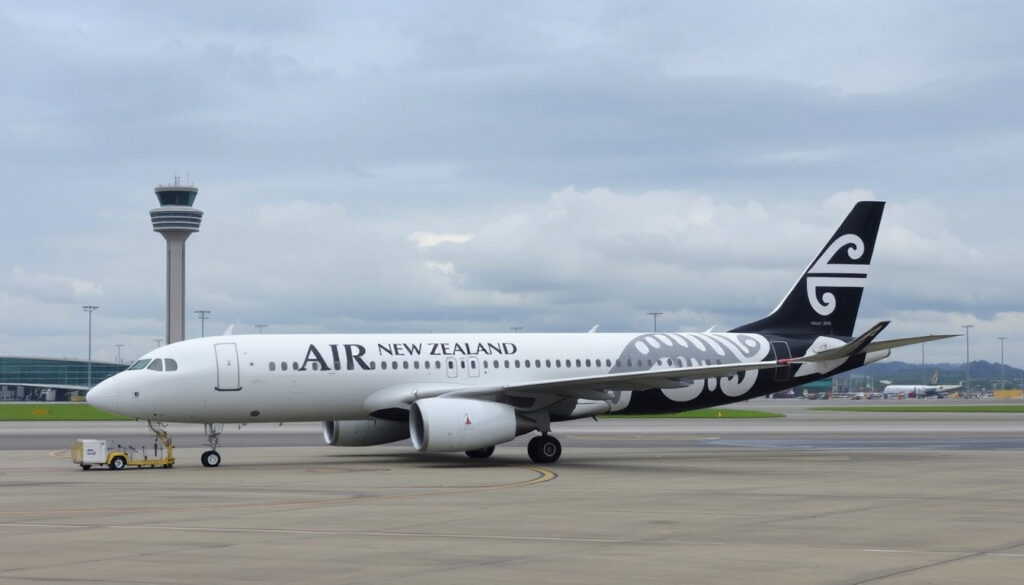
Anyone who has priced a flight across the Tasman already knows one thing: Air New Zealand is often the expensive option. But price alone doesn’t tell you whether it’s a good airline—or how it compares with Qantas. This article weighs the carrier’s awards against its real operational challenges and gives you a clear picture of what each airline actually delivers.
Ranked World’s Best Airline: 7 times in 10 years (MTA) · Fleet size: 111 aircraft (Wikipedia) · Domestic destinations: 20 (Wikipedia) · International destinations: 28 in 18 countries (Wikipedia) · Alliance membership: Star Alliance (Wikipedia)
Quick snapshot
- Air New Zealand is the national carrier of New Zealand (Wikipedia)
- A Star Alliance member since 1999 (Wikipedia)
- Has won World’s Best Airline 7 times in 10 years (Air New Zealand official site)
- Exact operational weaknesses cited in some reports may reflect outdated data (Studocu discussion)
- Seat 11A complaint details vary by aircraft type (Studocu discussion)
- Founded in 1940 as TEAL, renamed Air New Zealand in 1965 (Wikipedia)
- First ranked World’s Best Airline in 2014 (Wikipedia)
- Air New Zealand expects a first-half 2026 loss before tax of NZ$30–55 million (Reuters (international news agency))
- Domestic operations remain sensitive to weather disruptions (NZ Ministry of Transport (official transport data))
| Attribute | Value |
|---|---|
| Headquarters | Auckland, New Zealand |
| Founded | 1940 (as TEAL) |
| Alliance | Star Alliance |
| Frequent flyer program | Airpoints |
| Safety rating | 7/7 (AirlineRatings) |
Is Air New Zealand a good airline?
Awards alone don’t define quality, but they offer a starting point. Air New Zealand has been named World’s Best Airline seven times in ten years by the MTA (Air New Zealand official site). The carrier also holds a perfect 7/7 safety rating from AirlineRatings.
What awards has Air New Zealand won?
- World’s Best Airline (MTA) – 7 times including 2024
- Best Premium Economy and Best Economy Cabin (multiple years)
- Star Alliance member since 1999
What do passenger reviews say?
TripAdvisor reviews show an average rating of 4 out of 5 across more than 10,000 reviews (TripAdvisor). Praise often focuses on cabin crew friendliness and the signature Kiwi hospitality, but seating comfort in economy and legroom on long-haul flights draw recurring complaints.
Air New Zealand wins on brand perception and safety credibility, but economy passengers on long sectors consistently report cramped legs. The award glow doesn’t erase the physical reality of seat pitch.
“Air New Zealand continues to lead the industry in cabin innovation and service consistency.”
— MTA representative, on the 2024 World’s Best Airline award
Bottom line: Air New Zealand is a genuinely good airline for safety and soft service, but budget-conscious flyers and tall travellers may find Qantas or Jetstar more comfortable for the price. Short-haul flyers on domestic routes get a better seat pitch than on long-haul.
Is Air New Zealand or Qantas better?
The trans-Tasman corridor makes this the most direct comparison. Both airlines compete on the same routes, and the price gap is real.
How do their on-time performances compare?
A January 2026 on-time performance report from the New Zealand Ministry of Transport (official government regulator) noted that Air New Zealand domestic jet services faced disruptions due to adverse weather, especially strong winds. Qantas has not published comparable New Zealand domestic data, but its Australian network benefits from larger domestic scale.
Which has better cabin comfort?
Air New Zealand wins on premium cabins (Premier and Skycouch) and has repeatedly won Best Premium Economy. Qantas has a slight edge in seat width in standard economy on A330s. The difference is marginal—about an inch.
Consumer NZ’s 2024 investigation found that Qantas was, on average, 16.7% cheaper than Air New Zealand on trans-Tasman routes examined, and Qantas was cheaper 94% of the time (Consumer NZ (New Zealand’s independent consumer watchdog)). That’s a clear price disadvantage for Air New Zealand.
| Metric | Air New Zealand | Qantas |
|---|---|---|
| Fleet size | 111 aircraft | ~130 aircraft |
| World’s Best Airline wins | 7 times | 0 times |
| Average trans-Tasman price | Higher (baseline) | 16.7% cheaper |
| Safety rating | 7/7 | 7/7 |
| Domestic destinations (NZ) | 20 | 8 (via Jetstar/QantasLink) |
The implication: Air New Zealand offers a better award-winning product but charges a premium. Qantas wins on price and network scale. For budget-first travellers, Qantas (or Jetstar) is usually the smarter choice on price alone.
Air New Zealand’s premium pricing may be justified by its consistent service quality, but the 16.7% average gap means a family of four could save several hundred dollars per booking by choosing Qantas on trans-Tasman routes.
What are the weaknesses of Air New Zealand?
Even the best-rated airline has weak spots. Air New Zealand’s operational profile reveals several vulnerabilities.
Operational weaknesses noted in reports
- Fuel price volatility – A Studocu discussion forum (student community, lower authority) reportedly flagged fuel cost sensitivity as a structural weakness.
- Regulatory complexity – Operating across multiple jurisdictions adds compliance costs and delays.
- Weather sensitivity – The Ministry of Transport report confirmed strong winds disrupted domestic jets in January 2026 (New Zealand Ministry of Transport (official transport data)).
- Financial exposure – Reuters reported on 21 October 2025 that Air New Zealand expects a first-half 2026 loss before tax of NZ$30 million to NZ$55 million, citing weak bookings and rising costs (Reuters (international news agency)).
Why avoid seat 11A?
Seat 11A on certain Air New Zealand Boeing 777-300ER aircraft has a notorious lack of window alignment—the window is set far forward, forcing passengers to lean. The issue is aircraft-specific and does not apply to all 777s or to the A380 fleet. While not a safety issue, it’s a well-known comfort complaint among frequent flyers.
Upsides
- High safety rating and award-winning service
- Strong brand recognition and customer loyalty
- Innovative cabin products (Skycouch, Premium Economy)
Downsides
- Higher average fares compared to Qantas
- Weather-dependent domestic operations
- Financial losses expected in 2026
- Comfort complaints on specific seats like 11A
Bottom line: Air New Zealand’s weaknesses are real but manageable: price premiums, weather sensitivity, and financial volatility. For travellers, the main concern is cost—Qantas offers a cheaper alternative on the same routes. The seat-specific complaints are minor compared to the larger operational picture.
Which New Zealand airline is the best?
New Zealand has a handful of airlines serving domestic and international routes. Air New Zealand dominates with 20 domestic destinations and 28 international destinations across 18 countries (Wikipedia).
How many airlines does New Zealand have?
| Airline | Type | Destinations |
|---|---|---|
| Air New Zealand | Full-service international & domestic | 20 domestic, 28 international |
| Jetstar (NZ domestic) | Low-cost | 4 domestic |
| Sounds Air | Regional small aircraft | 6 domestic |
| Originair | Regional | 4 domestic |
| Qantas (trans-Tasman) | Full-service international | 7 NZ destinations from Australia |
The pattern: Air New Zealand leads with unmatched connectivity, but Jetstar offers lower fares on trunk routes like Auckland-Christchurch. Sounds Air fills gaps in the Marlborough Sounds—a niche Air New Zealand doesn’t serve.
Air New Zealand vs Jetstar vs Sounds Air
For domestic travel, Air New Zealand is the highest-cost option but offers the most flights, baggage included, and no extra fees for seat selection. Jetstar is cheaper for booking early but charges for bags and seat selection. Sounds Air is best for regional connections to Picton, Blenheim, and Kapiti Coast.
What this means: “best” depends entirely on your route and budget. For a direct international connection from Auckland to New York, Air New Zealand is the only option. For a quick hop from Wellington to Christchurch, Jetstar may save NZ$50-100 on a same-day booking.
How to book and check in with Air New Zealand?
Booking is straightforward through the official website or app. Check-in opens 24 hours before departure; mobile boarding passes are available.
How to check in online?
- Visit the Air New Zealand website or open the app.
- Select “Check in” and enter booking reference and last name.
- Choose seats (if not already assigned) and download boarding pass.
What is the contact number?
Air New Zealand’s customer service number within New Zealand is 0800 737 000 (Air New Zealand official contact page). International callers should use +64 9 357 3000.
“The online check-in process is smooth, but the app sometimes lags during peak hours.”
— TripAdvisor reviewer, February 2025
Timeline
- – Founded as Tasman Empire Airways Limited (TEAL)
- – Renamed Air New Zealand
- – Partially privatized, then re-nationalized; Treasury noted expected loss of NZ$200 million for year ending 30 June 2001 (New Zealand Treasury (government financial oversight))
- – First ranked World’s Best Airline by MTA
- – Named World’s Best Airline for seventh time
- – Reuters reports expected first-half 2026 loss of NZ$30–55 million
The 2025-26 financial guidance signals that even an award-winning airline is vulnerable to macroeconomic headwinds—bookings softening and costs rising. Investors and frequent travellers alike should watch this closely.
What is confirmed and what remains unclear?
Confirmed facts
- Air New Zealand is the national carrier of New Zealand (Wikipedia)
- It is a Star Alliance member (Wikipedia)
- It has won World’s Best Airline 7 times (Air New Zealand official site)
- It has a 7/7 safety rating (Air New Zealand official site)
- Qantas is on average 16.7% cheaper on trans-Tasman routes (Consumer NZ (New Zealand’s independent consumer watchdog))
What’s unclear
- Exact nature of operational weaknesses cited in Studocu may be outdated or unverified (Studocu discussion)
- Seat 11A complaints vary significantly by aircraft type
- Long-term financial outlook after the expected 2026 loss
For New Zealanders and Australian travellers crossing the Tasman, the choice is clear: if service and awards matter, Air New Zealand is the premium pick. If saving 16.7% on the same route matters more, Qantas is the rational choice. The trade-off between brand prestige and wallet is real—and in 2026, more important than ever.
en.wikipedia.org, aerotime.aero, airspacetimes.com, faa.gov, reddit.com, facebook.com, youtube.com
For a more thorough breakdown of how Air New Zealand stacks up against its main competitor, see this detailed comparison with Qantas.
Frequently asked questions
Does Air New Zealand have Wi-Fi on board?
Yes, Air New Zealand offers inflight Wi-Fi on most long-haul and domestic jet aircraft. Prices vary by route; some flights include free messaging.
What is the baggage allowance for Air New Zealand?
Economy fares include one carry-on bag (7 kg) and one checked bag (23 kg) on most international routes. Domestic fares vary by fare class.
Can I change my Air New Zealand flight without penalty?
Flexi fares allow free changes; other fare types incur a change fee plus fare difference. Conditions depend on the booking class.
Does Air New Zealand fly to the United States?
Yes, Air New Zealand serves Los Angeles, San Francisco, Honolulu, Houston, and New York JFK from Auckland.
What class of service does Air New Zealand offer?
Air New Zealand offers Economy, Premium Economy, Business Premier, and on some aircraft the Economy Skycouch (a row of three seats that converts into a flat area).
How early should I arrive at the airport for an Air New Zealand flight?
Domestic flights: 60 minutes. International flights: 2-3 hours before departure. Check the official website for specific airport requirements.
Related stories




Liam O'Brien covers Australian politics and public affairs for Aussie Report.