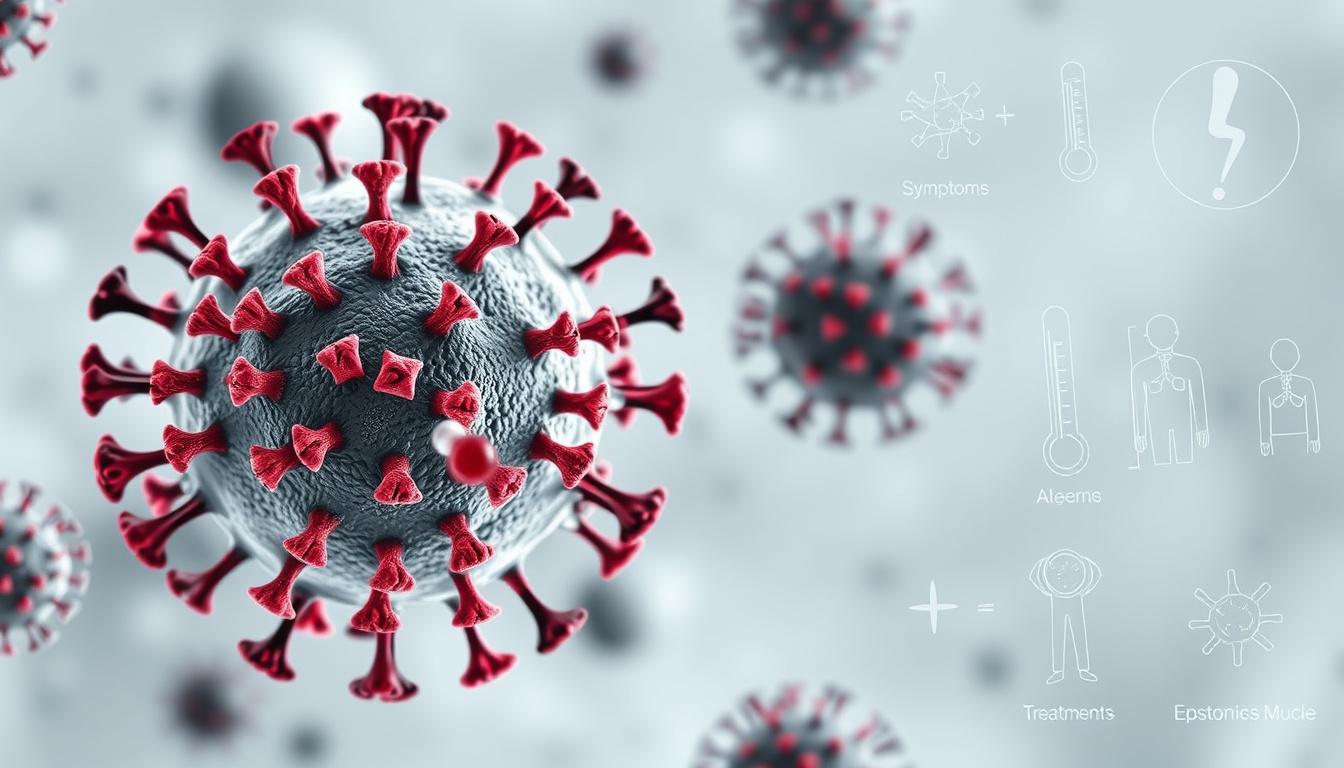

Epstein-Barr virus (EBV), also known as human herpesvirus 4 (HHV-4), ranks among the most common viral infections affecting humans worldwide. This DNA herpesvirus establishes lifelong infection in the body and serves as the primary cause of infectious mononucleosis, commonly called “mono” or the “kissing disease.” While most infected individuals experience no symptoms, EBV can produce significant illness in teenagers and young adults, including extreme fatigue, fever, and sore throat. The virus persists dormant in B lymphocytes after initial infection, with potential for reactivation under certain conditions.
Understanding EBV requires examining its transmission patterns, symptom presentation, diagnostic approaches, and potential complications. Medical researchers have studied this virus extensively since its discovery in 1964, linking it to various cancers and, more recently, investigating its possible role in multiple sclerosis. Public health organizations continue monitoring EBV prevalence and researching treatment options, though no specific antiviral therapy currently exists.
This article provides a comprehensive overview of Epstein-Barr virus, addressing common questions about symptoms, transmission, diagnosis, and long-term health implications based on current medical knowledge and authoritative sources.
What Is Epstein-Barr Virus?
Epstein-Barr virus belongs to the herpesvirus family, specifically categorized as human herpesvirus 4 (HHV-4). Discovered in 1964 by researchers Michael Epstein and Yvonne Barr, the virus targets B lymphocytes through CD21 receptors and establishes latency in these immune cells. Once infected, individuals carry the virus indefinitely, though it typically remains dormant without causing ongoing symptoms.
Herpesvirus (HHV-4), DNA virus
Fatigue, sore throat, fever, swollen lymph nodes
Primarily saliva (kissing, sharing utensils)
Supportive care only; no specific cure
- Over 90% of adults worldwide become infected with EBV by age 40
- The virus establishes lifelong latent infection in B lymphocytes
- EBV causes approximately 90% of infectious mononucleosis cases
- The virus has been linked to certain lymphomas and nasopharyngeal carcinoma
- Recent research suggests an association between EBV and multiple sclerosis
- Primary infection in children often produces no noticeable symptoms
- Most adults carry the virus without awareness of their infection
| Fact | Details |
|---|---|
| Discovered | 1964 by Michael Epstein and Yvonne Barr |
| Virus Type | DNA herpesvirus (HHV-4) |
| Primary Target | B lymphocytes (via CD21 receptors) |
| Global Prevalence | More than 90% of adults infected |
| Incubation Period | 4 to 6 weeks after exposure |
| Latency | Lifelong dormant infection in immune cells |
| Contagious Period | Weeks to months, including before symptoms appear |
Symptoms of Epstein-Barr Virus Infection
When Epstein-Barr virus produces symptomatic illness, it typically manifests as infectious mononucleosis. Symptoms generally appear four to six weeks after initial infection and may include extreme fatigue, fever, sore throat, and swollen lymph nodes in the neck, armpits, and groin area. Headaches and body aches frequently accompany these primary symptoms, according to the Centers for Disease Control and Prevention.
Physical Manifestations
The most characteristic symptoms of mono include severe fatigue that may persist for weeks or months after other symptoms resolve. Sore throat often appears strep-like but lacks the bacterial infection that antibiotics would treat. Swollen tonsils, white patches on the throat, and swollen lymph nodes contribute to the distinctive presentation of EBV-related illness.
Internal organ involvement can occur, particularly affecting the spleen and liver. Splenomegaly (enlarged spleen) develops in approximately 50% of patients during weeks two and three of illness, while hepatomegaly (enlarged liver) and elevated liver enzymes occur in up to 50% of cases. Some patients develop a rash, abdominal pain, or jaundice, with hepatitis occurring in 5-10% of those infected, according to medical sources.
Children who contract EBV often experience mild symptoms or none at all, making the infection easy to miss. Adolescents and young adults, however, typically develop the more pronounced mononucleosis syndrome with its characteristic cluster of symptoms. Adults over 40 may present with hepatitis rather than prominent throat symptoms.
When to Seek Medical Attention
Certain symptoms warrant prompt medical evaluation. Severe throat pain lasting more than a few days, difficulty breathing or swallowing, extreme weakness preventing daily activities, and abdominal pain (particularly in the upper left side suggesting spleen involvement) all merit professional assessment. Yellowing of the skin or eyes indicates possible liver involvement requiring medical attention.
How Does Epstein-Barr Virus Spread?
EBV spreads primarily through bodily fluids, with saliva serving as the most common vehicle for transmission. The virus earned the nickname “kissing disease” because intimate contact involving saliva transfer represents one of the most efficient transmission routes. However, the virus also transmits through sharing drinks, eating utensils, toothbrushes, and other personal items that contact saliva.
Transmission Routes
While saliva contact represents the primary transmission method, EBV can spread through other bodily fluids including blood, semen, and vaginal secretions. This means blood transfusions, organ transplants, and sexual contact can potentially transmit the virus. The Mayo Clinic notes that these routes account for fewer cases than salivary transmission.
The incubation period—the time between exposure and symptom onset—ranges from four to six weeks. During this period and for months afterward, infected individuals can spread the virus even without experiencing symptoms. Viral shedding continues for a median of six months after initial illness, though some individuals may shed virus intermittently for years.
People with EBV remain contagious for several weeks during the initial illness and can continue shedding virus for up to six months afterward. The virus can also reactivate without causing symptoms, potentially making infected individuals contagious again. EBV does not spread as easily as common colds or influenza, but it survives on moist objects for some time.
Reactivation and Contagiousness
Once established, EBV remains dormant in B cells indefinitely. Reactivation can occur when the immune system becomes compromised through stress, illness, or immunosuppressive medications. During reactivation, individuals may again become contagious, though they often show no symptoms themselves. This explains why some people who have had mono for years may occasionally test positive for active viral shedding.
The virus is not considered highly contagious in the general sense, as it does not spread easily through casual contact like sharing workspace or brief interactions. However, households and intimate partners face higher transmission risk due to repeated exposure to saliva through everyday activities.
Diagnosis and Treatment for EBV
Diagnosing Epstein-Barr virus infection involves combining clinical symptoms with laboratory testing. Healthcare providers often recognize mono based on its characteristic presentation—fatigue, sore throat, fever, and swollen lymph nodes—but laboratory confirmation helps ensure accurate diagnosis and rule out other conditions with similar symptoms.
Laboratory Testing Methods
The heterophile antibody test, commonly known as the Monospot test, provides a rapid initial screening for EBV infection. This test detects antibodies that the immune system produces in response to EBV and typically becomes positive two to nine weeks after infection begins. The sensitivity ranges from 70-92% in the early stages of illness, though it performs less reliably in young children, with only about 40% sensitivity in those under four years old, according to medical literature.
EBV-specific antibody testing offers more detailed information about the stage of infection. These tests detect different antibodies including VCA IgM (indicating acute infection), VCA IgG (which peaks two to four weeks after infection and persists lifelong), EA (early antigen), and EBNA (nuclear antigen). Repeat testing after 10-14 days may be necessary if initial results prove inconclusive.
| Test Type | What It Detects | Timing |
|---|---|---|
| Monospot (Heterophile) | General mono antibodies | Positive 2-9 weeks post-infection |
| VCA IgM | Acute infection marker | Present during acute phase |
| VCA IgG | Past or current infection | Peaks 2-4 weeks, persists lifelong |
| EBNA | Past infection only | Appears 2-4 months after onset |
| PCR Testing | Viral DNA in blood | Detects high loads in acute phase |
Treatment Approaches
No specific antiviral medication exists for EBV infection. Treatment focuses entirely on supportive care, allowing the immune system to control the virus naturally. Rest represents the cornerstone of management, as the body requires energy to mount an effective immune response and recover from the infection.
Healthcare providers typically recommend over-the-counter pain relievers and fever reducers to manage discomfort. Staying well-hydrated supports recovery, while throat lozenges and warm liquids soothe sore throat symptoms. Providers may skip extensive laboratory testing for patients with classic mono symptoms, as the clinical presentation often provides sufficient diagnostic information.
Aspirin should never be given to children or teenagers recovering from mono due to the risk of Reye’s syndrome, a rare but potentially fatal condition affecting the liver and brain. Acetaminophen or ibuprofen (for appropriate ages) should be used instead under medical guidance. Patients with confirmed splenomegaly must strictly avoid contact sports and heavy lifting for at least four to six weeks to prevent spleen rupture, a medical emergency.
Foods and Lifestyle During Recovery
While no specific diet cures EBV, certain dietary choices support recovery. Staying hydrated helps manage fever and fatigue, while nutritious foods provide energy for immune function. Some patients find soft, cool foods easier to tolerate when throat pain is severe. Processed foods and excessive sugar may temporarily worsen inflammation and fatigue.
Duration, Recovery, and Reactivation
Most people with infectious mononucleosis begin feeling better within two to four weeks, though full recovery often takes longer. Fatigue represents the most persistent symptom, potentially lingering for several weeks or even months after other symptoms resolve. The MedlinePlus resource notes that some individuals experience prolonged fatigue lasting three months or more.
Recovery Timeline
The acute phase of mono typically peaks during the first week of symptomatic illness, with fever, throat pain, and lymph node swelling most prominent. By the second and third weeks, energy levels gradually improve though may remain below normal. Most symptoms resolve within four weeks, but complete return to baseline energy and activity levels may require six to eight weeks or longer.
Physical complications such as enlarged spleen or liver involvement usually resolve as the infection clears. Athletes should receive clearance from healthcare providers before returning to sports, typically after a period of rest following resolution of splenomegaly. Strenuous activity too soon risks spleen rupture, which requires emergency surgical intervention.
Can You Get EBV Twice?
Once infected with EBV, the virus remains in the body for life. However, the immune system typically keeps the virus controlled and dormant after the initial infection resolves. Most people experience mono only once, as the immune system develops lasting antibodies against the virus.
Reactivation can occur without producing symptoms, meaning a person may test positive for active EBV shedding years after initial infection without feeling ill. Immunosuppression from medications, illness, or severe stress can trigger symptomatic reactivation in some individuals. Some people who had asymptomatic primary infections may later experience what appears to be a “second” mono infection, though this represents symptoms from reactivation rather than a new infection.
Complications and Long-Term Risks of EBV
While most EBV infections resolve without lasting problems, the virus has been associated with several serious health conditions. The National Institute of Allergy and Infectious Diseases acknowledges EBV’s involvement with various malignancies and chronic conditions. Understanding these associations helps individuals make informed decisions about monitoring and follow-up care. While most EBV infections resolve without lasting problems, the virus has been associated with several serious health conditions, and understanding these associations can be aided by learning more about Epstein Barr virus episodes.
EBV and Cancer Risk
EBV has been linked to certain types of lymphoma, including Burkitt lymphoma, Hodgkin lymphoma, and post-transplant lymphoproliferative disorder. The virus also associates with nasopharyngeal carcinoma, particularly prevalent in certain geographic regions, and some gastric carcinomas. Medical researchers emphasize that while EBV contributes to these cancers, the vast majority of people infected with EBV never develop malignancy.
The mechanism involves EBV’s ability to influence cell growth and division in infected B lymphocytes. When immune control fails or genetic factors align, these infected cells may proliferate abnormally. Immunocompromised individuals face higher risk, including those with HIV/AIDS, organ transplant recipients taking immunosuppressants, and people with rare genetic immune deficiencies.
Multiple Sclerosis Connection
Recent research has strengthened the association between EBV and multiple sclerosis, though causation has not been definitively proven. Studies published in 2022 demonstrated that people with MS almost universally show evidence of prior EBV infection, with the risk of MS increasing substantially after EBV infection. The World Health Organization notes this emerging area of research.
The relationship between EBV and multiple sclerosis represents an active area of investigation. While evidence suggests EBV may trigger MS in genetically susceptible individuals, researchers have not yet confirmed definitive causation. Further studies are needed to understand the mechanisms and develop preventive strategies targeting EBV.
Chronic Active EBV Infection
A small percentage of individuals develop chronic active EBV (CAEBV), a rare condition characterized by persistent high viral loads and ongoing symptoms. This condition typically requires specialized treatment and monitoring by infectious disease or immunology specialists. Symptoms may include persistent fatigue, fever, liver dysfunction, and lymph node enlargement continuing for months or years.
Historical Timeline of EBV Research
The understanding of Epstein-Barr virus has evolved significantly since its initial discovery, with milestones marking key advances in medical knowledge about this prevalent pathogen.
- 1964 — Researchers Michael Epstein and Yvonne Barr identify the virus while studying Burkitt lymphoma in African children, marking the first herpesvirus linked to human cancer.
- 1968 — Scientists establish the connection between EBV and infectious mononucleosis, explaining the clinical syndrome previously observed in teenagers and young adults.
- 1980s — Research confirms EBV’s role in nasopharyngeal carcinoma, particularly in populations in Southeast Asia and North Africa where this cancer occurs at higher rates.
- 2000s — Expanded understanding of EBV’s involvement in various lymphoproliferative disorders and its mechanisms of immune evasion and latency.
- 2022 — Studies published linking EBV infection to multiple sclerosis risk, opening new avenues for MS prevention research.
Established Facts and Ongoing Questions
Medical science has established certain facts about EBV while other aspects remain under investigation. Understanding this distinction helps readers appreciate both what is known with certainty and where research continues.
| Well-Established Information | Areas Requiring Further Research |
|---|---|
| EBV causes infectious mononucleosis in the majority of symptomatic cases | The exact mechanisms by which EBV may trigger multiple sclerosis |
| Saliva serves as the primary transmission vehicle | Specific triggers for EBV reactivation in otherwise healthy individuals |
| The virus establishes lifelong latent infection | Timeline for effective vaccine development, if achievable |
| Over 90% of adults worldwide carry the virus | Why some individuals develop chronic active EBV while others do not |
| EBV associates with certain lymphomas and nasopharyngeal carcinoma | Long-term outcomes for patients with post-mono chronic fatigue |
The Public Health Context of EBV
Epstein-Barr virus represents one of the most widespread human viral infections globally. Serological studies indicate that 60-90% of adults show evidence of past infection, with rates approaching 90-95% in populations over 40 years old. This near-universal exposure makes EBV both a public health priority and a reminder of the limitations of avoiding exposure in everyday life.
The virus disproportionately affects certain populations. Teenagers and young adults who escape infection during childhood often experience more severe mono symptoms. College students living in close quarters historically face elevated mono transmission rates, leading to the condition’s association with campus life. Immunocompromised individuals face greater risk of complications and reactivation.
Public health guidance focuses on reducing transmission through avoiding sharing of personal items that contact saliva, though this remains difficult to implement broadly given the virus’s prevalence and ability to spread before symptoms appear. For those diagnosed with mono, guidance emphasizes rest, hydration, and avoiding activities that could cause spleen injury during recovery.
Expert Perspectives and Medical Guidance
Healthcare organizations provide consistent guidance regarding EBV management. The Centers for Disease Control and Prevention emphasizes that EBV spreads most commonly through bodily fluids, particularly saliva, and that most people recover from mono within two to four weeks with appropriate supportive care.
“Most people who have infectious mononucleosis will have a full recovery with rest and self-care. There is no specific treatment recommended for mono, as antibiotics are not effective against viral infections.”
Medical professionals advise against strenuous activity during the recovery period, particularly for patients with enlarged spleens. Most healthcare providers recommend waiting at least three to four weeks before returning to contact sports or heavy exercise, with gradual return to activity as symptoms permit.
Summary
Epstein-Barr virus represents a nearly ubiquitous human infection with wide-ranging health implications. While most infected individuals never experience symptoms, those who develop infectious mononucleosis face weeks of fatigue, throat pain, and potential complications affecting the liver and spleen. The virus spreads primarily through saliva contact and establishes lifelong latent infection in immune cells.
No specific antiviral treatment exists for EBV, making supportive care the mainstay of management. Healthcare providers may recommend Influenza A Treatment strategies or similar supportive approaches during recovery. Those experiencing persistent symptoms should consult their healthcare provider, particularly if considering medical care options in their area.
Ongoing research continues exploring EBV’s associations with cancer and multiple sclerosis, with recent 2022 studies strengthening the evidence for EBV’s role in MS development. While questions remain about exact mechanisms and causation, the medical community recognizes the importance of this widespread virus in human health.
Frequently Asked Questions
What do EBV test results mean?
Positive VCA IgM indicates acute infection, VCA IgG alone suggests recent infection, while EBNA positivity indicates past infection. Heterophile antibodies (Monospot) suggest mono but may be negative early in illness or in young children. Your healthcare provider interprets results based on symptoms and timing.
What is chronic Epstein-Barr virus?
Chronic active EBV (CAEBV) is a rare condition where the virus continues causing symptoms for months or years. Unlike typical recovery, patients experience persistent fatigue, fever, liver problems, and elevated viral loads. This requires specialist management and close monitoring.
Does Epstein-Barr virus cause multiple sclerosis?
Research strongly suggests EBV increases MS risk, with nearly all MS patients showing prior EBV infection. However, causation has not been definitively proven. The mechanism may involve how EBV affects immune cells in genetically susceptible individuals. Research continues investigating this association.
Is EBV the same as mono?
EBV causes approximately 90% of infectious mononucleosis cases, but other viruses can produce similar symptoms. EBV is the virus itself; mono is the clinical syndrome it typically produces. Some people infected with EBV never develop mono symptoms.
How long does fatigue last after mono?
Fatigue typically persists longer than other mono symptoms, often lasting three to six weeks after other symptoms resolve. Some individuals experience prolonged fatigue lasting three months or longer. Rest, hydration, and gradual return to activity support recovery.
Can EBV spread through kissing?
Yes, kissing represents one of the most common transmission routes for EBV, which is why mono is called the “kissing disease.” Saliva transfer through kissing, sharing drinks, or using contaminated utensils can all transmit the virus during active shedding or even before symptoms appear.

Rachel Walsh leads fact-checking, source verification and corrections at Aussie Report.